









All Sauce from Weekly Gravy:

Kids watching YouTube videos are being hammered with messages promoting junk food like candy, sugary drinks, fast food and sweet or salty snacks, a new study says. About 75% of 6- to 8-year-olds and 36% of 3- to 5-year-olds were fed promotions for junk food while watching YouTube or YouTube Kids videos they chose on their own mobile devices, researchers reported in the Journal of the Academy of Nutrition and Dietetics. “More than half of food brands in these videos came from companies that participate in the Children’s Food and Beverage Advertising Initiative, a U.S. food industry self-regulatory program,” said senior investigator Jennifer Harris, a senior research advisor at the Rudd Center for Food Policy and Health at the University of Connecticut. “Despite these companies’ pledges to only advertise healthier choices to children, child-influencers frequently promoted their brands, including candy, sugary drinks and sweet and salty snacks,” she said in a news release. For the study, researchers observed 101 kids as they watched YouTube videos in their homes for 30 minutes. About 73% of food brand appearances promoted junk food, while only 3% of food-related messages highlighted healthy options, results show. Most of this messaging occurred as part of brand appearances embedded within video content that purposely blurred food promotion with entertainment. More than 60% of food brand appearances were embedded in the video content,…  read on >  read on >

Violence, addiction and abuse can keep children a step behind other kids when it comes to their education, a new study says. Children who’ve experienced only a single traumatic event are more than twice as likely to be chronically absent from school due to health problems, researchers reported in the journal Academic Pediatrics. And the more adverse events a child endures, the higher the odds they’ll miss more school, researchers add. “This study reinforces what pediatricians have long known: that kids exposed to adversity often show up in the clinic and the classroom with complex challenges,” lead researcher Dr. Rebecca Tsevat, a pediatrician and general internist at UCLA Health, said in a news release. Adverse childhood experiences already have been associated with lifetime health problems like cancer, diabetes, heart disease, sexually transmitted infections and suicide, according to the U.S. Centers for Disease Control and Prevention (CDC). The toxic stress caused by these experiences can affect a child’s brain development and immune response, making them vulnerable to a host of physical and mental health problems, the CDC says. For this new study, researchers analyzed data from parents of more than 10,000 children 6 to 17 collected by the 2021-2022 National Health Interview Survey, a regular poll conducted by the U.S. Census Bureau on behalf of the CDC’s National Center for Health Statistics. About 1 in 4…  read on >  read on >

Violence, addiction and abuse can keep children a step behind other kids when it comes to their education, a new study says. Children who’ve experienced only a single traumatic event are more than twice as likely to be chronically absent from school due to health problems, researchers reported in the journal Academic Pediatrics. And the more adverse events a child endures, the higher the odds they’ll miss more school, researchers add. “This study reinforces what pediatricians have long known: that kids exposed to adversity often show up in the clinic and the classroom with complex challenges,” lead researcher Dr. Rebecca Tsevat, a pediatrician and general internist at UCLA Health, said in a news release. Adverse childhood experiences already have been associated with lifetime health problems like cancer, diabetes, heart disease, sexually transmitted infections and suicide, according to the U.S. Centers for Disease Control and Prevention (CDC). The toxic stress caused by these experiences can affect a child’s brain development and immune response, making them vulnerable to a host of physical and mental health problems, the CDC says. For this new study, researchers analyzed data from parents of more than 10,000 children 6 to 17 collected by the 2021-2022 National Health Interview Survey, a regular poll conducted by the U.S. Census Bureau on behalf of the CDC’s National Center for Health Statistics. About 1 in 4…  read on >  read on >

There’s widespread support among Americans for requiring that kids be vaccinated before they can go to school, a new Harvard survey has found. About 4 in 5 U.S. adults (79%) say parents should be required to have their kids vaccinated against preventable diseases like measles, mumps and rubella to attend school, according to poll results from the Harvard T.H. Chan School of Public Health. Required school vaccination also has heavy bipartisan support, including 90% of Democrats, 68% of Republicans, and 66% of people who support the Make America Great Again movement, results show. Further, nearly 3 in 4 parents (72%) support school vaccination requirements. “Childhood vaccine requirements are less controversial than many people may think,” Brian Castrucci, president and CEO of the de Beaumont Foundation, said in a news release. “This poll shows that they’re widely supported across political groups—and it’s heartening to see that so many Americans understand the importance of vaccination, which remains a fundamental pillar of public health and disease prevention,” added Castrucci. The de Beaumont Foundation, a public health think tank, co-sponsored the poll. These poll results come as the U.S. faces a multi-state measles outbreak.  There have been 23 measles outbreaks in 2025, according to the U.S. Centers for Disease Control and Prevention. As of Tuesday, a total 1,227 confirmed measles cases have been reported in 36 states and New…  read on >  read on >

There’s widespread support among Americans for requiring that kids be vaccinated before they can go to school, a new Harvard survey has found. About 4 in 5 U.S. adults (79%) say parents should be required to have their kids vaccinated against preventable diseases like measles, mumps and rubella to attend school, according to poll results from the Harvard T.H. Chan School of Public Health. Required school vaccination also has heavy bipartisan support, including 90% of Democrats, 68% of Republicans, and 66% of people who support the Make America Great Again movement, results show. Further, nearly 3 in 4 parents (72%) support school vaccination requirements. “Childhood vaccine requirements are less controversial than many people may think,” Brian Castrucci, president and CEO of the de Beaumont Foundation, said in a news release. “This poll shows that they’re widely supported across political groups—and it’s heartening to see that so many Americans understand the importance of vaccination, which remains a fundamental pillar of public health and disease prevention,” added Castrucci. The de Beaumont Foundation, a public health think tank, co-sponsored the poll. These poll results come as the U.S. faces a multi-state measles outbreak.  There have been 23 measles outbreaks in 2025, according to the U.S. Centers for Disease Control and Prevention. As of Tuesday, a total 1,227 confirmed measles cases have been reported in 36 states and New…  read on >  read on >

Indiana Pacers star Tyrese Haliburton tore his right Achilles tendon during the team’s loss in Game 7 of the NBA Finals, the team confirmed. The injury happened with about five minutes left in the first quarter. Haliburton was driving to the basket when he suddenly collapsed to the ground.  He began slamming the floor in pain, seemingly aware of the serious injury, NBC News reported. Haliburton had already been playing through a right calf strain, which he suffered in Game 5. “I want to be on the floor, and if I have the ability to, if I can — like I said, if I can walk, I want to be out there,” Haliburton said after Game 6. “I just want to be out there with my brothers to compete.” By the end of the game, cameras showed Haliburton using crutches as he met his teammates following their 103-91 loss to the Oklahoma City Thunder. “What happened with Tyrese, all of our hearts dropped. But he will be back,” Pacers head coach Rick Carlisle said. Carlisle praised the 25-year-old for his playoff performance, calling it “one of the great individual playoff runs in the history of the NBA with dramatic play after dramatic play.” Haliburton appeared in 23 playoff games this year. He averaged 17.3 points, 5.3 rebounds and 8.6 assists per game, NBC News said.…  read on >  read on >

Alternatives to weekly injections of weight-loss drugs may on the way. A monthly dose of a new drug called MariTide helped participants in a phase 2 clinical trial shed about 20% of their body weight over a year, researchers reported Monday in The New England Journal of Medicine. Made by Amgen, MariTide was among several next-generation treatments for diabetes and obesity discussed at a meeting of the American Diabetes Association in Chicago, which concluded Monday. “The more options, the better,” Dr. Michelle Ponder, an assistant professor of medicine at Duke University in Durham, N.C., told NBC News. Unlike the GLP-1 drugs, Ozempic, Wegovy, Mounjaro and Zepbound, which are injected every week, MariTide includes a monoclonal antibody that lets the drug stay in the body longer. The upshot: People can take it once a month, not every week. That, Ponder said, would be a boon for patients and prescribers alike. “It’s always just easier for patients to only have to take something once per month,” she told NBC. “A lot of patients we see in endocrinology are diabetes patients, and so they’d be taking multiple shots of insulin per day. And so, every last shot matters, even if it’s three less shots per month.” The phase 2 trial included nearly 600 adults, some with type 2 diabetes and obesity, others with obesity alone. Some received monthly…  read on >  read on >

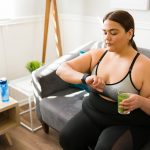
Fitness trackers aren’t accurately assessing the physical activity of people with obesity, a new study argues. Differences in walking gait, speed, energy burn and other factors mean that folks with excess weight aren’t getting an accurate read from their devices, researchers wrote in the journal Scientific Reports. “People with obesity could gain major health insights from activity trackers, but most current devices miss the mark,” senior researcher Nabil Alshurafa, an associate professor of behavioral medicine at Northwestern University Feinberg School of Medicine in Chicago, said in a news release. Alshurafa’s team has developed a new algorithm that enables smartwatches to more accurately monitor the calories burned by people with obesity, researchers said. Lab tests show that the new algorithm achieves over 95% accuracy in real-world situations, the study says. “Without a validated algorithm for wrist devices, we’re still in the dark about exactly how much activity and energy people with obesity really get each day — slowing our ability to tailor interventions and improve health outcomes,” Alshurafa said. Alshurafa said he was motivated to create the algorithm after going to an exercise class with his mother-in-law, who has obesity. “She worked harder than anyone else, yet when we glanced at the leaderboard, her numbers barely registered,” Alshurafa said. “That moment hit me: fitness shouldn’t feel like a trap for the people who need it most.”…  read on >  read on >

Fitness trackers aren’t accurately assessing the physical activity of people with obesity, a new study argues. Differences in walking gait, speed, energy burn and other factors mean that folks with excess weight aren’t getting an accurate read from their devices, researchers wrote in the journal Scientific Reports. “People with obesity could gain major health insights from activity trackers, but most current devices miss the mark,” senior researcher Nabil Alshurafa, an associate professor of behavioral medicine at Northwestern University Feinberg School of Medicine in Chicago, said in a news release. Alshurafa’s team has developed a new algorithm that enables smartwatches to more accurately monitor the calories burned by people with obesity, researchers said. Lab tests show that the new algorithm achieves over 95% accuracy in real-world situations, the study says. “Without a validated algorithm for wrist devices, we’re still in the dark about exactly how much activity and energy people with obesity really get each day — slowing our ability to tailor interventions and improve health outcomes,” Alshurafa said. Alshurafa said he was motivated to create the algorithm after going to an exercise class with his mother-in-law, who has obesity. “She worked harder than anyone else, yet when we glanced at the leaderboard, her numbers barely registered,” Alshurafa said. “That moment hit me: fitness shouldn’t feel like a trap for the people who need it most.”…  read on >  read on >

People living with an autoimmune disease are nearly twice as likely to suffer from mood problems like depression, anxiety or bipolar disorder, a new large-scale study says. The risk of mood disorders is 87% to 97% higher in people suffering from rheumatoid arthritis, inflammatory bowel disease, lupus, multiple sclerosis, psoriasis and Graves’ syndrome, researchers reported June 24 in the BMJ Mental Health. This risk remains higher even after accounting for other factors like age, income and family history of psychiatric disorders, researchers found. “Together, these results support the hypothesis that exposure to chronic inflammation may be associated with a greater risk for affective disorders,” concluded the research team led by Arish Mudra Rakshasa-Loots with the University of Edinburgh Center for Clinical Brain Sciences in the U.K. For the study, researchers drew on data from 1.5 million people participating in a new large-scale U.K. health study. Upon recruitment to the ongoing study, people provided a history of their physical and mental health. In all, more than 37,800 of the study participants reported living with an autoimmune condition. About 29% of people with an autoimmune illness said they’d been previously diagnosed with a mood disorder, compared with 18% of the general population, results show. This included more than 25% versus 15% diagnosed with depression, and 21% versus nearly 13% diagnosed with anxiety. Women with autoimmune diseases were…  read on >  read on >