






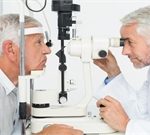
Though good vision is critical, a new survey finds that most folks fall short when it comes to knowledge about eye diseases. The American Academy of Ophthalmology (AAO) commissioned the online survey of more than 3,500 U.S. adults aged 18 and older. While the survey found that 81% said they’re knowledgeable about vision health, only 19% knew the three main causes of blindness in the United States: glaucoma, age-related macular degeneration and diabetic eye disease. Only 47% knew that vision loss and blindness don’t affect all people equally, and just 37% knew that people don’t always have symptoms before they lose their vision to eye diseases. In addition, less than half (47%) knew that because it adapts to vision loss, the brain can make it difficult to know if you are losing your vision. “Far too often, we witness the consequences of patients entering the ophthalmologist’s office too late to avoid severe vision loss,” AAO president Dr. Anne Coleman said in an academy news release. “In 2020, we want all Americans to have clear vision when it comes to eye health. That starts with educating yourself about eye diseases and visiting an ophthalmologist,” she said. Healthy adults should see an ophthalmologist for a baseline eye exam by age 40 and have their eyes checked every year or two at age 65 or older, the AAO…  read on >

(HealthDay News) — Turmeric has been used across the globe for many health conditions, such as pain, fatigue, breathing issues and rheumatism, says the National Center for Complementary and Integrative Health. It mentions this information about turmeric: Long-term turmeric use may cause gastrointestinal problems. There isn’t enough evidence that turmeric helps reduce inflammation. Preliminary studies show that turmeric could be helpful in controlling knee pain and skin irritation. The center says you should always inform your healthcare provider about any alternative health approaches you use.

(HealthDay News) — Ankle sprains can occur when the ankle is rolled, twisted or turned the wrong way, says Mayo Clinic. Pain, tenderness and swelling are typical symptoms of a sprained ankle. To help prevent ankle sprains, Mayo Clinic suggests: Warm up before exercising or playing sports. Be careful when walking, running or working on an uneven surface. Use a support brace or tape on a weak or previously injured ankle. Wear shoes that fit well. Minimize wearing high heels. Don’t participate in activities you are not conditioned for. Keep your muscles strong and flexible. Practice stability training and balance exercises.

(HealthDay News) — Keratosis pilaris, sometimes called chicken skin, is a condition that causes small rough bumps, says the American Academy of Dermatology. Though the condition is generally harmless, some people opt for treatment. To treat chicken skin, the academy suggests: Apply a moisturizer with urea or lactic acid after a shower or bath. Using a loofah or microdermabrasion kit to diminish bumps. Talk to your doctor about medication to exfoliate your skin. Consider laser treatment if moisturizer and medicine both fail.

Don’t get tackled by the flu if you go to a Super Bowl party this weekend. Some simple precautions can protect you and others, said Libby Richards, an associate professor who specializes in public health at Purdue University School of Nursing in West Lafayette, Ind. “If you are sick or a family member or friend you are planning on visiting for a Super Bowl gathering is sick with the flu or influenza-like illnesses, you should avoid contact,” Richards said in a university news release. “Don’t visit until the symptoms have resolved — even if that means having to stay home for the big game,” she advised. If you’re hosting a party, encourage people to wash their hands before eating and to use utensils when they handle food. Have antibacterial hand gel near common gathering places and provide paper towels, not cloth, in bathrooms. After high-fiving with others to celebrate a great play: “Don’t touch your face, eyes, nose or mouth afterward, as that is an easy way to transfer germs,” Richards said. The United States has recently seen an increase in flu activity, according to the latest update from the U.S. Centers for Disease Control and Prevention. At least 15 million people have been diagnosed with the flu this season, resulting in 140,000 hospitalizations and 8,200 deaths, including 54 children, the CDC said. The best…  read on >

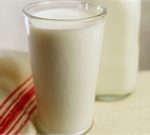
If you want to slow down the aging process, it might not hurt to replace whole milk with skim, new research suggests. The study of over 5,800 U.S. adults found that those who regularly indulged in higher-fat milk had shorter telomeres in their cells — a sign of accelerated “biological aging.” The findings do not prove that milk fat, per se, hastens aging, stressed researcher Larry Tucker, a professor of exercise sciences at Brigham Young University in Provo, Utah. But the study does lend support to what U.S. dietary guidelines suggest for adults: If you’re going to drink cow’s milk, opt for low-fat or skim, Tucker said. Telomeres are bits of DNA that sit at the tips of your chromosomes — like the plastic caps at the ends of a shoelace. In essence, they help keep the chromosomes from fraying and sticking together. As people age, their telomeres gradually get shorter, and research has linked shorter telomere length to a higher risk of developing and dying from infections, cancer and heart disease. “A variety of lifestyle factors are also related to telomere length,” Tucker said. Obese people, for example, tend to have shorter telomeres than lean people, as do smokers versus nonsmokers. And people who eat lots of fiber, vegetables and fruit typically have longer telomeres than those who shun those foods. So for the…  read on >

(HealthDay News) — One of the simplest ways to maintain healthy vision is to protect your eyes from injury, says the American Academy of Ophthalmology. About 90 percent of eye injuries involve lack of protective eyewear. Whether you’re maintaining equipment or playing sports, wearing appropriate protective eyewear is very important, the doctor’s group says.

The Harvard-associated lab that created the “CoolSculpting” process of reducing fat says it’s on the trail of the next advance in nonsurgical slimming. CoolSculpting freezes fat cells by applying an ice-cold gel pad to the skin, causing cells to die off and either be flushed away or absorbed by the body, said lead researcher Dr. Lilit Garibyan, an investigator at the Wellman Center for Photomedicine at Massachusetts General Hospital in Boston. Now her lab is trying to make that process even more effective by injecting an icy liquid slurry directly into fat deposits. In tests with pigs, the injectable slurry containing 20% to 40% ice caused fat deposits to melt away over several weeks, researchers reported recently in the journal Plastic and Reconstructive Surgery. The procedure is headed to human clinical trials next, and researchers hope to have it approved and on the market in a few years, Garibyan said. The U.S. Food and Drug Administration approved CoolSculpting in 2008. Garibyan said it remains the only noninvasive technology the FDA has cleared to reduce and reshape fat deposits in the body. The process works using a principle that you observe every time you open your refrigerator — fats freeze at a lower temperature than water, she said. Butter turns to liquid at warmer temperatures, but solidifies in the fridge, Garibyan said. Water remains liquid at…  read on >

More than one-third of working Americans don’t get enough sleep, and the problem is greatest among the police, the military, health care workers and truckers, researchers report. Their analysis of data from more than 150,000 employed adults between 2010 and 2018 also found that the rate of inadequate sleep (7 hours or less) rose from about 31% to nearly 36% during that time. “Inadequate sleep is associated with mild to severe physical and mental health problems, injury, loss of productivity, and premature mortality,” said study author Jagdish Khubchandani, a health science professor at Ball State University in Indiana. “This is a significant finding because the U.S. is currently witnessing high rates of chronic diseases across all ages, and many of these diseases are related to sleep problems,” Khubchandani said in a university news release. In 2018, professions with the highest levels of poor sleep included the police and military (50%), health care support occupations (45%), transport and material moving (41%), and production occupations (41%). Among men, those who reported getting 7 hours or less of sleep a night rose from 30.5% in 2010 to 35.5% in 2018. Among women, that rate rose from 31.2% to 35.8%. From 2010 to 2018, the largest increases in sleep deprivation were reported by men, multiracial adults, older adults, those living in the western United States, and widowed, divorced, or…  read on >

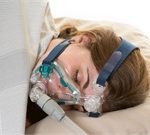
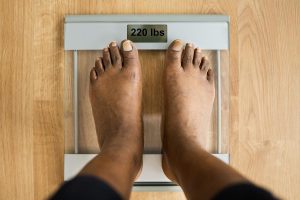
People with sleep apnea are often told to lose weight to ease their symptoms. Now a new study suggests that shedding fat in a particular trouble spot may be key: the tongue. If you didn’t know the tongue harbors body fat, you’re probably not alone. “Most people aren’t thinking about tongue fat,” said senior researcher Dr. Richard Schwab, chief of sleep medicine at the University of Pennsylvania. When it comes to sleep apnea, however, the anatomy of the tongue may be critical. Obstructive sleep apnea (OSA) is a disorder in which the muscles of the throat fail to keep the airways open during sleep. That results in repeated interruptions in breathing — along with symptoms such as loud snoring and daytime grogginess due to poor sleep. OSA is common — affecting an estimated 25 million Americans, according to the American Academy of Sleep Medicine. While it can affect people at any weight, obesity raises the risk. Not everyone who is obese develops OSA, though. And in a 2014 study, Schwab’s team found that when you compare obese individuals with and without sleep apnea, those with the disorder typically have larger tongues with more fat tissue. That brought up the question of whether losing tongue fat improves sleep apnea. Weight loss is known to help ease the condition, Schwab said — but the precise pathways are…  read on >