







(HealthDay News) — Wintry climates and cold viruses can lead to frequent nosebleeds, says the National Hemophilia Foundation. To prevent nosebleeds during winter, the foundation suggests: Use a humidifier to moisturize the air. Use a nasal saline spray or water-soluble gel for your nose. If you have a cold, wipe gently. Don’t clear your nose with hard blows. Avoid vigorous activities after a nosebleed. Don’t pick your nose.
All Health/Fitness:
Health Tip: Stop Picking Your Skin
(HealthDay News) — If you cannot stop picking at scabs or bumps, you may have a condition called skin picking disorder (SPD). The urge to pick at the skin affects at least 5 million Americans, says Harvard Medical School. To tackle the issue, the school suggests: Know your triggers. It can help a doctor decide which treatment to pursue. Make it more difficult to pick by keeping your nails short or wearing gloves. Distract your hands with silly putty, a stress ball or fidget toy. Consider therapy.
Trump Administration to Ban Most Flavored E-Cigarettes

After months of delay, the Trump Administration is expected to announce this week that it will ban mint-, fruit- and dessert-flavored e-cigarette cartridges, while allowing the continued sale of menthol- and tobacco-flavored vapes. The White House originally proposed a ban on flavored e-cigarettes — thought to be especially enticing to teens — back in September. But since then, the Administration had seemed to bow to industry and political pressures and back away from such a ban. As reported Tuesday by The New York Times, the new ban would have one important exception: Flavored liquid nicotine used in “open tank systems” will not be outlawed. That’s seen as a concession to the burgeoning vape shop business. Trump also hinted that the ban might not last long. “We think we are going to get back in the market very, very quickly,” he said at a New Year’s Eve news conference, held during a party at his Mar-a-Lago resort, the Times reported. “We have a very big industry. We’re going to take care of the industry.” Health advocates supported the ban, but said the exclusion of menthol could greatly weaken its effect. “The administration policy will fall well short of what is necessary to address this growing epidemic,” said Nancy Brown, CEO of the American Heart Association. “By allowing menthol flavors and flavored liquid nicotine used in open… read on >
Study Might Point Alzheimer’s Research in Whole New Direction
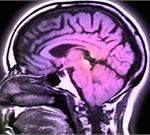
A new brain scanning technique is shaking up what researchers thought they knew about Alzheimer’s disease. Researchers now say they can predict with reasonable accuracy which brain regions will wither and atrophy in Alzheimer’s by identifying the places where tau protein “tangles” have built up. “You could really predict which brain regions were going to get damaged just on the basis of the tau scans we took at the beginning of the study,” said lead researcher Renaud La Joie, a postdoctoral fellow at the University of California, San Francisco, Weill Institute for Neurosciences. “Where the tau was built up at the beginning of the study was very predictive of where the actual brain shrinkage was going to happen in the next year or two.” These findings support the growing contention that toxic tau proteins drive brain degeneration in Alzheimer’s more directly than the disease’s other hallmark, amyloid protein plaques, the study authors said. The scans also could allow doctors to predict how Alzheimer’s will affect individual patients, by tracking which brain regions have more accumulated tau tangles, La Joie said. “If you use tau scans in this group of patients with Alzheimer’s disease, it might actually help you have very precise expectations and very precise measures of what’s going to happen to the patient,” he said. For example, doctors might be able to predict which… read on >
New Year’s Resolutions Didn’t Stick? Try a Monday Reset

You made your resolution — this year was finally going to be the year you lost weight. But then your neighbor stopped by with a plate of cookies, and well, your resolve didn’t even last a day. Maybe next year? But instead of looking at your resolutions as a sweeping year-long project, what if you concentrated on making healthy changes every Monday? That way, if you slip up and dive into that pile of cookies, another chance to get it right is just a few days away. It’s called the Healthy Monday Reset, and the idea is to send you into the week with a fresh mindset. “What we really want people to do is implement a mindset change. If you think about the New Year’s resolution, you pick one day a year to start changes and if you fall off the wagon, it’s another year,” explained Ron Hernandez, the managing director of The Monday Campaigns. “But with Monday, you have 52 opportunities in a year. If you fall short one week, there’s always an opportunity right around the corner, so you don’t have to wait that long to make a change,” he said. This, Hernandez added, is something you can really integrate: “‘Monday, I will make better choices.’” A study conducted with Johns Hopkins Bloomberg School of Public Health found that people often describe… read on >
Switching to Vaping Isn’t Quitting Smoking

If 2020 is the year you’ve resolved to quit smoking, don’t start vaping. No matter what e-cigarette companies advertise, their products aren’t approved by the U.S. Food and Drug Administration as a safe and effective way to give up tobacco, the American Lung Association warns. And switching from tobacco to e-cigarettes isn’t quitting. “The simple truth is that e-cigarettes are tobacco products, and the Lung Association has been helping people avoid and quit using tobacco for decades,” said Michelle Caul, the association’s director for health promotions. She said misinformation about the health risks of vaping runs rampant, especially among young people. She offered these facts in a news release: E-cigarettes are tobacco products and no tobacco products are safe. Hospitalizations and deaths from vaping show that e-cigarette use is harmful. Quitting is ending addiction to nicotine, which can be difficult. E-cigarettes contain dangerous metals and toxic chemicals that can cause lung disease. “One of the biggest problems with e-cigarettes is that many times people become dual users, meaning they smoke cigarettes when they can and use vaping devices at other times,” said Dr. Albert Rizzo, chief medical officer of the association. “Using e-cigarettes is not safe,” he added. “A new study released in December found adults who currently or ever used e-cigarettes are 30% more likely to develop chronic lung disease, including asthma, bronchitis and… read on >
Health Tip: 5 Eye Myths Debunked
(HealthDay News) — With regular visits to a vision specialist, about half of all cases of blindness can be avoided or treated, says Harvard Medical School. There are many misconceptions about what can hurt or help vision. The school debunks five common eye myths: Doing eye exercises will not improve or preserve sight. Reading in dim light does not worsen vision. But it may tire your eyes more quickly. Although good for you, eating carrots will not prevent vision problems. You can wear glasses all the time. Wearing glasses won’t worsen vision. Staring at a computer screen will not permanently harm your eyes, but it may cause eyestrain.
Exercise May Keep Your Brain Healthy

Exercise may do more than build body strength: New research shows it might also keep brain cells in shape. According to the study, exercise helps maintain the brain’s gray matter, which is linked to various skills and thinking abilities. So, keeping your gray matter intact may help prevent thinking declines, the German researchers explained. The report was published online Jan. 2 in the Mayo Clinic Proceedings. “This [study] provides indirect evidence that aerobic exercise can have a positive impact on cognitive function in addition to physical conditioning,” said Dr. Ronald Petersen, a Mayo Clinic neurologist. “Another important feature of the study is that these results may apply to older adults, as well. There is good evidence for the value of exercise in midlife, but it is encouraging that there can be positive effects on the brain in later life as well,” said Petersen, who co-authored an editorial that accompanied the report. The German researchers, led by Katharina Wittfeld, followed more than 2,000 adults in northeastern Germany from 1997 through 2012. Over the study period, fitness was measured and participants underwent MRI brain scans. Although the study found an association between exercise and brain health, it couldn’t prove a cause-and-effect relationship. According to Mayo Clinic experts, moderate and regular exercise — about 150 minutes per week — is recommended. Good fitness also involves: Not smoking. Following… read on >
Obesity May Boost Effectiveness of a Lung Cancer Therapy
Obesity is seldom a friend to health, but in one medical context it might give patients a slight advantage, new research suggests. Specifically, when Australian researchers looked at trials of atezolizumab, an immune system-based treatment for lung cancer, they found that the drug worked better in people who were overweight. The trial involved more than 2,100 people with the most common form of lung tumors, non-small cell lung cancer. About half of the participants were normal weight, about one-third were overweight and 7 percent were obese. About two-thirds of patients received the newer drug, atezolizumab, while the remaining third got an older drug, docetaxel. The researchers found that obesity — a body mass index (BMI) of 30 or above — “was associated with significantly improved overall survival in patients treated with atezolizumab, but not in those who received docetaxel.” What’s more, there seemed to be a “linear relationship.” As body weight rose in patients taking atezolizumab, so too did their odds for survival. The study was led by Dr. Ganessan Kichenadasse, a medical oncology researcher at the Flinders Centre for Innovation in Cancer. “This is an interesting outcome and it raises the potential to investigate further with other cancers and other anti-cancer drugs,” Kichenadasse said in a Flinders University news release. “While our study only looked at baseline and during treatment, we believe it warrants… read on >
Some Solid Advice on New Year’s Resolutions That Might Stick

If you plan to make a New Year’s resolution about improving your health, the American Medical Association (AMA) has some good suggestions. “With too many holiday sweets and not enough exercise likely in the rearview mirror, now is the perfect time to consider your personal goals and how you can make positive health choices in the coming year,” AMA President Dr. Patrice Harris said in an association news release. “The good news is that there are a few easy steps you can take that will set you on the right track for a healthier 2020,” Harris added. Learn your risk for type 2 diabetes and take steps to prevent or delay the onset of the disease. Get the recommended amount of physical activity. For adults, it’s at least 150 minutes a week of moderate-intensity activity, or 75 minutes a week of vigorous-intensity activity. Know your blood pressure and, if you have high blood pressure, take steps to get it under control. Doing so will reduce your risk of heart attack or stroke. Cut back on processed foods, especially those with added sodium and sugar. Eat less red meat and processed meats, and eat more plant-based foods, such as olive oil, nuts and seed. Reduce your consumption of sugar-sweetened beverages and drink more water instead. If you’re prescribed antibiotics, take them exactly as directed. Antibiotic resistance… read on >