









Lose weight. Eat healthier. Quit smoking. These are all popular New Year’s resolutions that are often only kept for a short time, if at all. About 40% of Americans make a New Year’s resolution, most of which are abandoned by February, according to researchers at Ohio State University Wexner Medical Center. But Bernadette Melnyk, vice president for health promotion and chief wellness officer and dean of the College of Nursing at Ohio State, has some tips to help you make your resolutions stick: Set a realistic, specific, 30-day goal. The more specific and realistic the goal, the more likely it will be achieved. Break big goals down into small ones, and try to tackle one small change for 30 days. Many resolutions fail because people try too much, too fast. Write your goal down and put it where you can see it every day. Keep a journal of your successes and write encouraging messages to yourself. Visualize yourself accomplishing your goal and celebrating your success. If you have a positive attitude, you’re more likely to achieve your goal. Share your resolution with a friend or family member, and enlist them to help support your effort with encouraging texts and calls as you let them in on your progress. Work toward your goal one day at a time. You can always start again if you fall…  read on >

(HealthDay News) — More than 5 million teeth are knocked out every year in children and adults, says the American Association of Endodontists. But knocked out teeth don’t have to be lost for good. Proper emergency action can save the tooth, so it can be replanted. If your tooth gets knocked out, the association urges you to: Pick up the tooth by the crown, not the root. If the tooth is dirty, gently rinse it with water. Re-position the tooth in the socket immediately, if possible. Keep the tooth moist at all times. See an endodontist or dentist within 30 minutes of the injury.

(HealthDay News) — The bones that form your spine are cushioned by round discs. A herniated disc is a disc that has been pushed out of place, says the American Association of Neurological Surgeons. The group mentions warning signs of a herniated disc: Low backache. Numbness or weakness in parts of the body. A sharp, electric shock-like pain on one side of the body. Burning or tingling that radiates into the leg or shoulder. Sometimes, these symptoms can worsen with standing, walking or sitting.

Diets heavy in red meat and fatty foods could help spur a leading cause of vision loss in older Americans, new research suggests. The study found that people who ate more typical Western diets were three times more likely to develop an eye condition that robs you of your central vision — late-stage age-related macular degeneration. “What you eat seems to be important to your vision, and to whether or not you have vision loss later in life,” said study lead author Amy Millen. She’s an associate professor in the department of epidemiology and environmental health at the University at Buffalo’s School of Public Health and Health Professions, in Buffalo, N.Y. “People know that diet influences cardiovascular risk and the risk of obesity, but the public may not know that diet can affect vision loss,” Millen said. Age-related macular degeneration occurs when a part of the eye called the macula is damaged. Sometimes this happens when deposits called drusen grow on the macula. Or it can occur when new blood vessels keep forming and leak blood, scarring the macula, according to the American Academy of Ophthalmology. Genetics and smoking are known risk factors for age-related macular degeneration. The study included almost 1,300 people from a nationally representative sample. Most did not have macular degeneration. There were 117 who had early AMD, and 27 had late.…  read on >

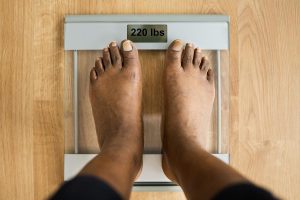
If you’re overweight or obese, shedding pounds can help improve your health and your longevity. What’s more, doing so may also significantly boost your bank balance. Researchers at Johns Hopkins University in Baltimore wanted to know how a person’s expenses and income might change if their weight went from obese to overweight to normal at different ages. So they created a computer simulation that looked at a person’s health and weight over the years. They considered time lost from work, health complications related to being overweight — such as heart disease, high blood pressure and diabetes — and direct medical costs to insurers and health care facilities, among other things. How much could you save? If you’re 20, the research, which was published in the Journal of Obesity, found that slimming down from obese to overweight saves you more than $17,000 in direct medical costs and lost productivity over your lifetime. Reach a healthy weight and the savings exceed $28,000. If you’re in your 40s, going from obese to overweight saves you around $18,000. Drop to a healthy weight and you’ll net an average lifetime savings of about $31,000. Savings peak for those who slim down in the midlife years. A 50-year-old who goes from obese to overweight can see a lifetime savings of about $36,000. You’ll add even more cash to your wallet if…  read on >

(HealthDay News) — Stomach cramps typically refer to abdominal pain or discomfort between your chest and groin. Causes range from constipation to food intolerance, says the Icahn School of Medicine at Mount Sinai. To help ease mild stomach cramps at home, Mount Sinai suggests: Sip water or other clear fluids. Only drink sports drinks in small amounts. Avoid solid food for the first few hours. If you’ve been vomiting, wait six hours and then eat small amounts of mild foods, such as crackers. Do not take any medicine without talking to your doctor. Call your doctor if stomach cramps are accompanied by other symptoms, such as persistent bloating, diarrhea, weight loss or fever.

You know that you need to watch your weight to lower your risk for heart disease, but that is far from the whole story. It is possible to be overfat without being overweight, meaning that you’re storing fat within your body even though the scale says you’re at a normal weight. And that distinction is key when it comes to heart health. For decades, doctors have measured a patient’s body mass index, or BMI, as a way to determine the heart disease risk associated with obesity. (There are even online calculators that let you figure out your BMI on your own.) Basically, BMI determines the percentage of fat in your body related to your height and weight. But some evidence shows that the calculation may misclassify up to 50% of those at risk of heart disease from excess fat. That’s because fat is not all the same. Fat stored around the belly, called visceral fat, is associated with insulin resistance and other metabolic abnormalities. Evidence shows that someone with a large waistline — over 40 inches for men and 35 inches for women — is more at risk for heart disease than someone with a smaller waist, even if they have the same BMI. Who’s most at risk? There are genetic components that indicate that white men, black women and people from India and South…  read on >

(HealthDay News) — For folks with weak vision, eyeglasses, contact lenses, medicine and surgery may improve sight, says the National Eye Institute. Difficulty reading, matching colors and recognizing faces are common signs of weak vision. If you have vision loss, the institute stresses the need for a support team. Having a primary eye care professional and an optometrist or opthalmologist who specializes in weak vision is important. With your team, you can discuss options for support services, adaptive devices and vision rehabilitation. The institute encourages people with weak vision to be their own healthcare advocate. Remember to explore options, learn about your condition and ask questions.

(HealthDay News) — Facial wrinkles can be caused by aging, smoking and sun damage, says Cleveland Clinic. Though there are treatment options for wrinkles, it’s best to prevent them before they develop. Cleveland Clinic mentions these ways to prevent wrinkles: Apply sunscreen every day as part of your morning routine. Avoid products that are harsh on the skin. Find gentle moisturizers. Consume less sugar and refined carbohydrates. Get fresh air. Avoid environmental pollutants, such as soot and exhaust. Do your best to get six-to-eight hours of sleep each night. Include healthy fats in your diet, such as olive oil, nuts and avocado. If you smoke, quit.

Playing sports may improve the brain’s ability to process sounds, a finding that could lead to new therapies for people who struggle with hearing, researchers report. “No one would argue against the fact that sports lead to better physical fitness, but we don’t always think of brain fitness and sports,” said study senior author Nina Kraus. She’s a professor of communication sciences and neurobiology at Northwestern University, in Evanston, Ill. “We’re saying that playing sports can tune the brain to better understand one’s sensory environment,” added Kraus, director of the university’s Auditory Neuroscience Laboratory. The study included 495 female and male Northwestern student athletes and a control group of 493 age- and sex-matched non-athletes. The participants’ brain activity was monitored while they wore earbuds that delivered speech sounds. The athletes were more adept than those in the control group to tune out background noise to better process the speech sounds, according to the study published Dec. 9 in the journal Sports Health. That skill can be useful for athletes when they’re trying to hear a teammate or coach calling to them during a game. Kraus equated it to listening to a DJ on the radio. “Think of background electrical noise in the brain like static on the radio,” Kraus said in a university news release. “There are two ways to hear the DJ better: minimize…  read on >