









Remember your sweet-hearted grandmother, who never seemed out of sorts no matter what nonsense landed in her lap? That’s a skill, and it improves during a person’s lifespan, a new study says. Women get better at managing their anger as they age, starting in middle-age, researchers reported today in the journal Menopause. That doesn’t mean they’re less angry. Researchers found that as women got older, they were more prone to anger and their anger became more intense, results show. But women also became less likely to express their anger or act with hostility, researchers found. “These findings are consistent with research on emotion regulation efforts during aging, such that efforts to control anger increase along with experiences of anger,” concluded the research team led by Nancy Fugate Woods of the University of Washington School of Nursing in Seattle. For the study, researchers analyzed data from 271 women taking part in the Seattle Midlife Women’s Health Study, a long-term research project that started in the early 1990s. As part of the project, participants filled out a questionnaire related to their anger and hostility levels up to four or five times over the years. Results showed that as women aged, they became more adept at managing anger even though they felt it more acutely. Researchers said this might be because women feel more generativity — a sense…  read on >  read on >

(HealthDay News) —Exposure to wildfire smoke might make some people more likely to fall ill by altering their immune systems, a new study says. Fire smoke appears to affect the immune system on a cellular level, researchers report in the journal Nature Medicine. People exposed to smoke showed an increase in memory immune cells that provide long-term immunity and biomarkers of increased inflammation and immune activity, results show. They also showed changes in dozens of genes related to allergies and asthma, researchers said. “We’ve known that smoke exposure causes poor respiratory, cardiac, neurological and pregnancy outcomes, but we haven’t understood how,” senior researcher Dr. Kari Nadeau, chair of environmental health at the Harvard TH Chan School of Public Health, said in a news release. “Our study fills in this knowledge gap, so that clinicians and public health leaders are better equipped to respond to the growing threat of difficult-to-contain toxic wildfires,” she added. Fire smoke is filled with all sorts of matter that can affect the body – fine particle pollution, “forever” PFAS chemicals, toxic metals and gases, and even cancer-causing compounds, researchers said in a news release. To test smoke’s effect on the body, researchers collected blood samples from 31 firefighters and civilians and compared them to those from 29 people not exposed to smoke. Results show that smoke-exposed people had more immune cells…  read on >  read on >

(HealthDay News) —Exposure to wildfire smoke might make some people more likely to fall ill by altering their immune systems, a new study says. Fire smoke appears to affect the immune system on a cellular level, researchers report in the journal Nature Medicine. People exposed to smoke showed an increase in memory immune cells that provide long-term immunity and biomarkers of increased inflammation and immune activity, results show. They also showed changes in dozens of genes related to allergies and asthma, researchers said. “We’ve known that smoke exposure causes poor respiratory, cardiac, neurological and pregnancy outcomes, but we haven’t understood how,” senior researcher Dr. Kari Nadeau, chair of environmental health at the Harvard TH Chan School of Public Health, said in a news release. “Our study fills in this knowledge gap, so that clinicians and public health leaders are better equipped to respond to the growing threat of difficult-to-contain toxic wildfires,” she added. Fire smoke is filled with all sorts of matter that can affect the body – fine particle pollution, “forever” PFAS chemicals, toxic metals and gases, and even cancer-causing compounds, researchers said in a news release. To test smoke’s effect on the body, researchers collected blood samples from 31 firefighters and civilians and compared them to those from 29 people not exposed to smoke. Results show that smoke-exposed people had more immune cells…  read on >  read on >

Regular exercise can ease mood disorders in children and teens, offering an alternative to medications like antidepressants, a new evidence review has concluded. Both anxiety and depression decrease when kids take part in structured exercise programs, researchers reported June 26 in Journal of the American Academy of Child & Adolescent Psychiatry. Further, the review found that anxiety and depression symptoms are relieved by different types of workout regimens. “Exercise is a low-cost, widely accessible strategy that could make a real difference to children’s mental health,” lead investigator Ben Singh, a research fellow with the University of South Australia, said in a news release. Importantly, exercise could help improve kids’ moods without resorting to drugs like antidepressants, researchers added. More than three-quarters of children and teens experience depression or anxiety, leaving parents desperate for effective solutions, researchers said in background notes. For the new review, researchers pooled data from 375 prior clinical trials involving more than 38,000 kids 5 to 18. Results showed that: Anxiety improved through low-intensity resistance exercise, such as lifting light weights or gentle training using circuit weight machines. Depression improved most through moderate-intensity exercise in training that combines aerobic and strength programs. The biggest improvements in depression symptoms occurred in programs lasting fewer than three months, suggesting that benefits of exercise can emerge relatively quickly, researchers said. Children with depression and ADHD…  read on >  read on >

Regular exercise can ease mood disorders in children and teens, offering an alternative to medications like antidepressants, a new evidence review has concluded. Both anxiety and depression decrease when kids take part in structured exercise programs, researchers reported June 26 in Journal of the American Academy of Child & Adolescent Psychiatry. Further, the review found that anxiety and depression symptoms are relieved by different types of workout regimens. “Exercise is a low-cost, widely accessible strategy that could make a real difference to children’s mental health,” lead investigator Ben Singh, a research fellow with the University of South Australia, said in a news release. Importantly, exercise could help improve kids’ moods without resorting to drugs like antidepressants, researchers added. More than three-quarters of children and teens experience depression or anxiety, leaving parents desperate for effective solutions, researchers said in background notes. For the new review, researchers pooled data from 375 prior clinical trials involving more than 38,000 kids 5 to 18. Results showed that: Anxiety improved through low-intensity resistance exercise, such as lifting light weights or gentle training using circuit weight machines. Depression improved most through moderate-intensity exercise in training that combines aerobic and strength programs. The biggest improvements in depression symptoms occurred in programs lasting fewer than three months, suggesting that benefits of exercise can emerge relatively quickly, researchers said. Children with depression and ADHD…  read on >  read on >

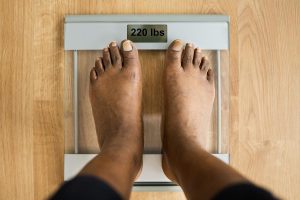
A person’s body fat percentage provides a better estimate of their risk for early death than their body mass index (BMI), a new study says. People with a high body-fat percentage were 78% more likely to die within 15 years from any cause and 3.6 times more likely to die from heart disease, researchers reported June 24 in the Annals of Family Medicine. On the other hand, BMI — an estimate of body fat based on height and weight — was not associated with a statistically significant higher risk of death from any cause, researchers found. Waist circumference also proved to be more accurate than BMI in assessing the risks posed by excess weight, researchers added. “This is a game changer for body composition assessment,” lead researcher Arch Mainous III, a professor of health services, management and policy at the University of Florida, said in a news release. “Our study is basically a Coke versus Pepsi comparison of a direct and indirect measure of body fat for future mortality risk,” Mainous said. “A direct measure of body fat percentage that can be done in the office was significantly better.” The new findings add to mounting evidence that BMI is not as accurate as other measures for reflecting the effect of a person’s weight on their health. “The medical community has been aware that BMI has…  read on >  read on >

A person’s body fat percentage provides a better estimate of their risk for early death than their body mass index (BMI), a new study says. People with a high body-fat percentage were 78% more likely to die within 15 years from any cause and 3.6 times more likely to die from heart disease, researchers reported June 24 in the Annals of Family Medicine. On the other hand, BMI — an estimate of body fat based on height and weight — was not associated with a statistically significant higher risk of death from any cause, researchers found. Waist circumference also proved to be more accurate than BMI in assessing the risks posed by excess weight, researchers added. “This is a game changer for body composition assessment,” lead researcher Arch Mainous III, a professor of health services, management and policy at the University of Florida, said in a news release. “Our study is basically a Coke versus Pepsi comparison of a direct and indirect measure of body fat for future mortality risk,” Mainous said. “A direct measure of body fat percentage that can be done in the office was significantly better.” The new findings add to mounting evidence that BMI is not as accurate as other measures for reflecting the effect of a person’s weight on their health. “The medical community has been aware that BMI has…  read on >  read on >

Violence, addiction and abuse can keep children a step behind other kids when it comes to their education, a new study says. Children who’ve experienced only a single traumatic event are more than twice as likely to be chronically absent from school due to health problems, researchers reported in the journal Academic Pediatrics. And the more adverse events a child endures, the higher the odds they’ll miss more school, researchers add. “This study reinforces what pediatricians have long known: that kids exposed to adversity often show up in the clinic and the classroom with complex challenges,” lead researcher Dr. Rebecca Tsevat, a pediatrician and general internist at UCLA Health, said in a news release. Adverse childhood experiences already have been associated with lifetime health problems like cancer, diabetes, heart disease, sexually transmitted infections and suicide, according to the U.S. Centers for Disease Control and Prevention (CDC). The toxic stress caused by these experiences can affect a child’s brain development and immune response, making them vulnerable to a host of physical and mental health problems, the CDC says. For this new study, researchers analyzed data from parents of more than 10,000 children 6 to 17 collected by the 2021-2022 National Health Interview Survey, a regular poll conducted by the U.S. Census Bureau on behalf of the CDC’s National Center for Health Statistics. About 1 in 4…  read on >  read on >

Violence, addiction and abuse can keep children a step behind other kids when it comes to their education, a new study says. Children who’ve experienced only a single traumatic event are more than twice as likely to be chronically absent from school due to health problems, researchers reported in the journal Academic Pediatrics. And the more adverse events a child endures, the higher the odds they’ll miss more school, researchers add. “This study reinforces what pediatricians have long known: that kids exposed to adversity often show up in the clinic and the classroom with complex challenges,” lead researcher Dr. Rebecca Tsevat, a pediatrician and general internist at UCLA Health, said in a news release. Adverse childhood experiences already have been associated with lifetime health problems like cancer, diabetes, heart disease, sexually transmitted infections and suicide, according to the U.S. Centers for Disease Control and Prevention (CDC). The toxic stress caused by these experiences can affect a child’s brain development and immune response, making them vulnerable to a host of physical and mental health problems, the CDC says. For this new study, researchers analyzed data from parents of more than 10,000 children 6 to 17 collected by the 2021-2022 National Health Interview Survey, a regular poll conducted by the U.S. Census Bureau on behalf of the CDC’s National Center for Health Statistics. About 1 in 4…  read on >  read on >

Fitness trackers aren’t accurately assessing the physical activity of people with obesity, a new study argues. Differences in walking gait, speed, energy burn and other factors mean that folks with excess weight aren’t getting an accurate read from their devices, researchers wrote in the journal Scientific Reports. “People with obesity could gain major health insights from activity trackers, but most current devices miss the mark,” senior researcher Nabil Alshurafa, an associate professor of behavioral medicine at Northwestern University Feinberg School of Medicine in Chicago, said in a news release. Alshurafa’s team has developed a new algorithm that enables smartwatches to more accurately monitor the calories burned by people with obesity, researchers said. Lab tests show that the new algorithm achieves over 95% accuracy in real-world situations, the study says. “Without a validated algorithm for wrist devices, we’re still in the dark about exactly how much activity and energy people with obesity really get each day — slowing our ability to tailor interventions and improve health outcomes,” Alshurafa said. Alshurafa said he was motivated to create the algorithm after going to an exercise class with his mother-in-law, who has obesity. “She worked harder than anyone else, yet when we glanced at the leaderboard, her numbers barely registered,” Alshurafa said. “That moment hit me: fitness shouldn’t feel like a trap for the people who need it most.”…  read on >  read on >