








Kids coping with chronic health problems like asthma also are struggling with the emotional burden of stress, fear and sadness, a new study says. Almost 94% of comments posted online by chronically ill kids and their caregivers expressed negative feelings like disgust, sadness and fear, according to results published recently in the Journal of Affective Disorders. Fewer than 6% of the comments were positive, researchers said. “I was particularly struck by how clearly children’s emotional responses aligned with specific comorbidity patterns – for example, fear and sadness were especially dominant among those discussing multiple hospital visits or long-term medication,” lead researcher Israel Oluwalade, a master’s graduate at the University of Plymouth in the U.K., said in a news release. For the study, researchers used AI to analyze posts placed by 389 children or their caregivers between 2008 and 2023 on Care Opinion, a U.K. social media platform that allows people to share their experiences with health care services. Sentiments expressed by the posts were first categorized as positive, negative or neutral, and then further sorted into specific emotions like sad, fear, disgust, neutral, satisfied or amazed, the study says. Sadness was the most often expressed emotion, reflected in 3 of 5 posts (61%), researchers found. Fear and disgust were next most frequent, each showing up in 1 of every 6 posts (15%). “Sadness is frequently…  read on >  read on >

Adult children aren’t likely to fill the void left by the loss of a spouse, a new study says. Becoming widowed might cause a stronger bond between the remaining parent and their children, but these bonds don’t appear to ease the loneliness left by loss, researchers reported July 14 in Aging & Mental Health. These findings contradict the common notion that widowed people with children are less lonely than those who are childless, researchers said. “Widowhood is linked to persistent increases in loneliness. It also fosters stronger parent-child relationships, particularly for mothers, who often act as kin-keepers within the family,” lead investigator Maximilian Tolkamp, a research associate at the University of Siegen in Germany, said in a news release. “However, while widowhood appears to strengthen certain aspects of the parent-child relationship, these improvements do not mitigate increases in either social or emotional loneliness,” Tolkamp added. These findings are based on interviews with more than 5,600 married people with adult children taking part in a German aging study, of whom 475 lost their spouse. The death of a spouse is one of life’s most stressful events, and it can contribute to health problems like heart conditions as well as mental health problems like depression or chronic loneliness, researchers said in background notes. People were asked a series of questions related to their emotional and mental health,…  read on >  read on >

Adult children aren’t likely to fill the void left by the loss of a spouse, a new study says. Becoming widowed might cause a stronger bond between the remaining parent and their children, but these bonds don’t appear to ease the loneliness left by loss, researchers reported July 14 in Aging & Mental Health. These findings contradict the common notion that widowed people with children are less lonely than those who are childless, researchers said. “Widowhood is linked to persistent increases in loneliness. It also fosters stronger parent-child relationships, particularly for mothers, who often act as kin-keepers within the family,” lead investigator Maximilian Tolkamp, a research associate at the University of Siegen in Germany, said in a news release. “However, while widowhood appears to strengthen certain aspects of the parent-child relationship, these improvements do not mitigate increases in either social or emotional loneliness,” Tolkamp added. These findings are based on interviews with more than 5,600 married people with adult children taking part in a German aging study, of whom 475 lost their spouse. The death of a spouse is one of life’s most stressful events, and it can contribute to health problems like heart conditions as well as mental health problems like depression or chronic loneliness, researchers said in background notes. People were asked a series of questions related to their emotional and mental health,…  read on >  read on >

Worried about maintaining your regularity as you grow older? Changing your diet can reduce the risk of chronic constipation in middle-aged folks and seniors, a new study says. The Mediterranean diet and plant-based diets were found to best ward off constipation, researchers reported recently in the journal Gastroenterology. “Chronic constipation affects millions of people and can significantly impact a patient’s quality of life,” senior researcher Dr. Kyle Staller, a gastroenterologist at Massachusetts General Hospital in Boston, said in a news release. “Our findings suggest that as we age, certain healthy diets may provide benefits to our gut beyond the known cardiovascular benefits,” he continued. Healthy diets are known to ease constipation, but this is the first study to show certain diets might be able to prevent it in the first place, researchers said. For the study, they analyzed data on nearly 96,000 people who participated in three studies tracking the physical condition of health professionals. Participants regularly filled out diet questionnaires as part of the studies. More than 7,500 cases of constipation occurred among the participants during up to four years of follow-up, the study found. Researchers analyzed participants’ diets based on adherence to five different types of eating patterns: Mediterranean diet, low-carb diet, Western diet, plant-based diet, and a diet aimed at reducing inflammation. Plant-based diets reduced constipation risk by 20%, while Mediterranean diets…  read on >  read on >

Worried about maintaining your regularity as you grow older? Changing your diet can reduce the risk of chronic constipation in middle-aged folks and seniors, a new study says. The Mediterranean diet and plant-based diets were found to best ward off constipation, researchers reported recently in the journal Gastroenterology. “Chronic constipation affects millions of people and can significantly impact a patient’s quality of life,” senior researcher Dr. Kyle Staller, a gastroenterologist at Massachusetts General Hospital in Boston, said in a news release. “Our findings suggest that as we age, certain healthy diets may provide benefits to our gut beyond the known cardiovascular benefits,” he continued. Healthy diets are known to ease constipation, but this is the first study to show certain diets might be able to prevent it in the first place, researchers said. For the study, they analyzed data on nearly 96,000 people who participated in three studies tracking the physical condition of health professionals. Participants regularly filled out diet questionnaires as part of the studies. More than 7,500 cases of constipation occurred among the participants during up to four years of follow-up, the study found. Researchers analyzed participants’ diets based on adherence to five different types of eating patterns: Mediterranean diet, low-carb diet, Western diet, plant-based diet, and a diet aimed at reducing inflammation. Plant-based diets reduced constipation risk by 20%, while Mediterranean diets…  read on >  read on >

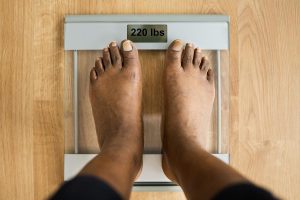
Cancer deaths linked to obesity more than tripled in the U.S. during the past two decades, a new study says. Deaths linked to the 13 types of obesity-related cancer rose to 13.5 deaths per million from 3.7 deaths per million between 1999 and 2020, researchers reported Sunday at the Endocrine Society’s annual meeting in San Francisco. “Obesity is a significant risk factor for multiple cancers, contributing to significant mortality,” said lead researcher Dr. Faizan Ahmed of Hackensack Meridian Jersey Shore University Medical Center in Neptune City, N.J. “This research underscores the need for targeted public health strategies such as early screening and improved access to care, especially in high-risk rural and underserved areas,” Ahmed added in a news release. More than 40% of U.S. adults have obesity, and obesity-related cancers represent 40% of all cancers diagnosed in the United States each year, researchers said in background notes. These include esophageal, breast, colon, uterine, gallbladder, stomach, kidney, liver, ovarian, pancreatic, thyroid and brain cancers, as well as the blood cancer multiple myeloma, researchers said. For the new study, researchers used data from the U.S. Centers for Disease Control and Prevention (CDC) to track more than 33,500 deaths from obesity-related cancers. Overall, obesity-related cancer deaths rose by nearly 6% a year on average between 1999 and 2000, results show. Between 2018 and 2020 the death rate took…  read on >  read on >

Cancer deaths linked to obesity more than tripled in the U.S. during the past two decades, a new study says. Deaths linked to the 13 types of obesity-related cancer rose to 13.5 deaths per million from 3.7 deaths per million between 1999 and 2020, researchers reported Sunday at the Endocrine Society’s annual meeting in San Francisco. “Obesity is a significant risk factor for multiple cancers, contributing to significant mortality,” said lead researcher Dr. Faizan Ahmed of Hackensack Meridian Jersey Shore University Medical Center in Neptune City, N.J. “This research underscores the need for targeted public health strategies such as early screening and improved access to care, especially in high-risk rural and underserved areas,” Ahmed added in a news release. More than 40% of U.S. adults have obesity, and obesity-related cancers represent 40% of all cancers diagnosed in the United States each year, researchers said in background notes. These include esophageal, breast, colon, uterine, gallbladder, stomach, kidney, liver, ovarian, pancreatic, thyroid and brain cancers, as well as the blood cancer multiple myeloma, researchers said. For the new study, researchers used data from the U.S. Centers for Disease Control and Prevention (CDC) to track more than 33,500 deaths from obesity-related cancers. Overall, obesity-related cancer deaths rose by nearly 6% a year on average between 1999 and 2000, results show. Between 2018 and 2020 the death rate took…  read on >  read on >

People typically don’t suffer severe withdrawal symptoms or fall into depression immediately after they stop taking antidepressants, a new evidence review says. There had been concerns that people who quit antidepressants would suddenly fall prey to depression or develop what’s known as antidepressant discontinuation syndrome. But those fears aren’t warranted, researchers write in JAMA Psychiatry. “Despite previous concern about stopping antidepressants, our work finds that most people do not experience severe withdrawal, in terms of additional symptoms,” lead researcher Dr. Sameer Jauhar, a senior clinical lecturer at Imperial College London in the U.K., said in a news release. “Importantly, depression relapse was not linked to antidepressant withdrawal in these studies, suggesting that if this does occur, people will need to see their health professional to rule out a recurrence of their depressive illness,” Jauhar added. For the study, researchers pooled data from 49 clinical trials involving more than 17,800 people, looking at the symptoms observed when people quit taking antidepressants. In most of the studies (44), people either abruptly quit the meds or tapered over one week, researchers said. In placebo-controlled trials, the most common antidepressant withdrawal symptoms within the first two weeks were dizziness (7.5% versus 1.8%); nausea (4.1% versus 1.5%); vertigo (2.7% versus 0.4%); and nervousness (3% versus 0.8%). Adding non-placebo studies increased symptom rates slightly: dizziness (11.8%); nightmares (8.1%); nervousness (7.6%); and…  read on >  read on >

People typically don’t suffer severe withdrawal symptoms or fall into depression immediately after they stop taking antidepressants, a new evidence review says. There had been concerns that people who quit antidepressants would suddenly fall prey to depression or develop what’s known as antidepressant discontinuation syndrome. But those fears aren’t warranted, researchers write in JAMA Psychiatry. “Despite previous concern about stopping antidepressants, our work finds that most people do not experience severe withdrawal, in terms of additional symptoms,” lead researcher Dr. Sameer Jauhar, a senior clinical lecturer at Imperial College London in the U.K., said in a news release. “Importantly, depression relapse was not linked to antidepressant withdrawal in these studies, suggesting that if this does occur, people will need to see their health professional to rule out a recurrence of their depressive illness,” Jauhar added. For the study, researchers pooled data from 49 clinical trials involving more than 17,800 people, looking at the symptoms observed when people quit taking antidepressants. In most of the studies (44), people either abruptly quit the meds or tapered over one week, researchers said. In placebo-controlled trials, the most common antidepressant withdrawal symptoms within the first two weeks were dizziness (7.5% versus 1.8%); nausea (4.1% versus 1.5%); vertigo (2.7% versus 0.4%); and nervousness (3% versus 0.8%). Adding non-placebo studies increased symptom rates slightly: dizziness (11.8%); nightmares (8.1%); nervousness (7.6%); and…  read on >  read on >

Even low levels of lead exposure can harm kids’ working memory, potentially affecting their education and development, according to a new study. Exposure to lead in the womb or during early childhood appears to increase kids’ risk of memory decay, accelerating the rate at which they forget information, researchers reported July 9 in the journal Science Advances. “There may be no more important a trait than the ability to form memories. Memories define who we are and how we learn,” said senior researcher Dr. Robert Wright, chair of environmental medicine at the Icahn School of Medicine at Mount Sinai in New York City. “This paper breaks new ground by showing how environmental chemicals can interfere with the rate of memory formation,” Wright said in a news release. For the study, researchers took blood lead measurements from the mothers of 576 children in Mexico during the second and third trimester of pregnancy. Later, the team took samples directly from the kids themselves, at ages 4 to 6. Between 6 and 8 years of age, the kids took a test called the delayed matching-to-sample task, or DMST, to measure their rate of forgetting. In the test, kids had to remember a simple shape for up to 32 seconds after it had been briefly shown to them, and then choose it from three offered options. The test lasted…  read on >  read on >