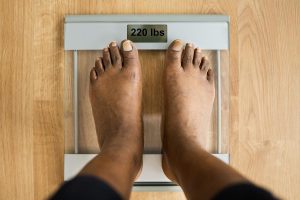










People who get weight-loss surgery experience an improvement in their mental health, but not because of the weight they lose, a new study says. Rather, these patients face much less societal stigma over their weight, and it’s that – not the actual weight loss – that boosts their mental health, researchers reported today in the journal Health Psychology. “The cumulative effect of stigma and discrimination actually contributes to a large part of the physical and mental health problems that we disproportionately see for patients with obesity compared to the general population,” lead researcher Larissa McGarrity, a clinical psychologist in physical medicine and rehabilitation at University of Utah Health, said in a news release. People who faced less stigma after their surgery had healthier eating habits and better mental health, researchers found. But patients who continued to experience stigma despite their surgery had higher risks of depression, anxiety and eating disorders, results showed. For the study, researchers assessed the mental health and habits of nearly 150 people who underwent weight-loss surgery, both prior to and then 18 to 36 months following their procedure. Results showed that, in general, people do tend to face less shame, blame and guilt around their body weight or shape in the years following surgery. In fact, the reduction in stigma was striking, McGarrity said. “The degree of change far exceeded clinically…  read on >  read on >

Counting calories isn’t simply a bummer, it might actually increase your risk of depression, a new study says. People on low-calorie diets scored higher for symptoms of depression, compared with those not dieting, researchers reported June 3 in BMJ Nutrition Prevention & Health. Overweight people and men were particularly vulnerable to the mood changes that come with a low-calorie diet, results show. “Calorie-restricted diets were associated with higher depressive symptom scores, which contrasts with the findings of earlier controlled studies,” concluded a team led by senior researcher Dr. Venkat Bhat, an associate professor of psychiatry at the University of Toronto. “Additionally, biological men and overweight individuals appear more vulnerable to the negative effects of restrictive eating,” the team added. Cutting calories might also rob the brain of nutrients needed to maintain a balanced mood, researchers speculated. For the study, researchers tracked the health of more than 28,500 participants in the U.S. National Health and Nutrition Examination Survey between 2007 and 2018. These people all had completed a questionnaire assessing symptoms of depression, and also were asked if they were following any particular diet. In all, just under 8% of participants reported symptoms of depression. Researchers categorized everyone based on their dietary pattern, including diets that restricted calories, diets that cut specific nutrients like carbs or fat or diets established to help manage health problems like…  read on >  read on >

Counting calories isn’t simply a bummer, it might actually increase your risk of depression, a new study says. People on low-calorie diets scored higher for symptoms of depression, compared with those not dieting, researchers reported June 3 in BMJ Nutrition Prevention & Health. Overweight people and men were particularly vulnerable to the mood changes that come with a low-calorie diet, results show. “Calorie-restricted diets were associated with higher depressive symptom scores, which contrasts with the findings of earlier controlled studies,” concluded a team led by senior researcher Dr. Venkat Bhat, an associate professor of psychiatry at the University of Toronto. “Additionally, biological men and overweight individuals appear more vulnerable to the negative effects of restrictive eating,” the team added. Cutting calories might also rob the brain of nutrients needed to maintain a balanced mood, researchers speculated. For the study, researchers tracked the health of more than 28,500 participants in the U.S. National Health and Nutrition Examination Survey between 2007 and 2018. These people all had completed a questionnaire assessing symptoms of depression, and also were asked if they were following any particular diet. In all, just under 8% of participants reported symptoms of depression. Researchers categorized everyone based on their dietary pattern, including diets that restricted calories, diets that cut specific nutrients like carbs or fat or diets established to help manage health problems like…  read on >  read on >

Children born to women who are obese have a higher risk of landing in a hospital with a severe infection, a new study says. Infants under 1 year of age have a 41% increased risk of hospitalization for infection if their mom was severely obese during pregnancy, researchers reported June 3 in the journal BMJ Medicine. And that risk extends into childhood and adolescence, with 5- to 15-year-olds 53% more likely to require hospital treatment for an infection, the study found. “Most excess hospital admissions for infection were caused by respiratory and gastrointestinal infections, and multisystem viral infections,” wrote a team led by Victoria Coathup, a researcher in epidemiology with the University of Oxford in the U.K. “The findings indicate a need to help women achieve and maintain a healthy weight before conception,” researchers added. The percentage of women who are obese while pregnant has nearly doubled, rising to more than 16% in the 2010s from under 9% in the 1990s, researchers said in background notes. To explore the potential health risks to children of obesity during pregnancy, researchers turned to a long-range study of 9,540 births in Bradford, U.K., between March 2007 and December 2010. About 56% of the mothers were overweight or obese during pregnancy, researchers found. Expectant moms with severe obesity — a body mass index (BMI) of 35 or higher —…  read on >  read on >

Children born to women who are obese have a higher risk of landing in a hospital with a severe infection, a new study says. Infants under 1 year of age have a 41% increased risk of hospitalization for infection if their mom was severely obese during pregnancy, researchers reported June 3 in the journal BMJ Medicine. And that risk extends into childhood and adolescence, with 5- to 15-year-olds 53% more likely to require hospital treatment for an infection, the study found. “Most excess hospital admissions for infection were caused by respiratory and gastrointestinal infections, and multisystem viral infections,” wrote a team led by Victoria Coathup, a researcher in epidemiology with the University of Oxford in the U.K. “The findings indicate a need to help women achieve and maintain a healthy weight before conception,” researchers added. The percentage of women who are obese while pregnant has nearly doubled, rising to more than 16% in the 2010s from under 9% in the 1990s, researchers said in background notes. To explore the potential health risks to children of obesity during pregnancy, researchers turned to a long-range study of 9,540 births in Bradford, U.K., between March 2007 and December 2010. About 56% of the mothers were overweight or obese during pregnancy, researchers found. Expectant moms with severe obesity — a body mass index (BMI) of 35 or higher —…  read on >  read on >

Troubled children and teenagers are languishing hours in chaotic hospital emergency rooms, waiting for a psychiatric bed to open, a new study says. About 1 in 3 kids who go to an emergency room (ER) amid a mental health crisis wait at least 12 hours to be transferred to psychiatric care, researchers report in the August 2025 issue of the Journal of the American College of Emergency Physicians Open. Further, more than 1 in 8 wait more than 24 hours before they are sent on to treatment, researchers found. “Our study underscores significant issues with access to mental health care for children and adolescents, who often face prolonged ED [emergency department] stays because a psychiatric bed is not available,” lead researcher Dr. Jennifer Hoffmann, behavioral health medical director for emergency medicine at Ann & Robert H. Lurie Children’s Hospital of Chicago, said in a news release. “As the youth mental health crisis continues, we have been seeing more severe psychiatric conditions in the ED,” she said. “Most of these kids seek emergency care at adult hospitals, which often have more limited pediatric resources compared to children’s hospitals and might not be prepared to provide the necessary supports.” For the new study, researchers analyzed records representing more than 5.9 million mental health ER visits for kids aged 5 to 17, using federal survey data collected between…  read on >  read on >

Troubled children and teenagers are languishing hours in chaotic hospital emergency rooms, waiting for a psychiatric bed to open, a new study says. About 1 in 3 kids who go to an emergency room (ER) amid a mental health crisis wait at least 12 hours to be transferred to psychiatric care, researchers report in the August 2025 issue of the Journal of the American College of Emergency Physicians Open. Further, more than 1 in 8 wait more than 24 hours before they are sent on to treatment, researchers found. “Our study underscores significant issues with access to mental health care for children and adolescents, who often face prolonged ED [emergency department] stays because a psychiatric bed is not available,” lead researcher Dr. Jennifer Hoffmann, behavioral health medical director for emergency medicine at Ann & Robert H. Lurie Children’s Hospital of Chicago, said in a news release. “As the youth mental health crisis continues, we have been seeing more severe psychiatric conditions in the ED,” she said. “Most of these kids seek emergency care at adult hospitals, which often have more limited pediatric resources compared to children’s hospitals and might not be prepared to provide the necessary supports.” For the new study, researchers analyzed records representing more than 5.9 million mental health ER visits for kids aged 5 to 17, using federal survey data collected between…  read on >  read on >

Being your own boss might seem potentially stressful, but self-employed women appear to have better heart health than those toiling for a company, a new study says. Women working for themselves had lower rates of obesity, physical inactivity, poor diet and sleeplessness, researchers reported recently in the journal BMC Public Health. These results indicate that the work environment could play a role in the risk factors that can increase risk of heart attack and stroke, researchers said. “There is a relationship between self-employment and heart disease risk factors and this relationship seems to be stronger in women relative to men,” said lead researcher Dr. Kimberly Narain, an assistant professor-in-residence at the David Geffen School of Medicine at UCLA. “It is imperative to increase our understanding of how the work environment gets under our skin so we can come up with ways to ensure that everyone has access to a healthy work environment,” Narain added in a news release. Prior studies have shown links between a person’s type of employment and their heart disease risk, researchers said in background notes. For example, executives tend to be healthier than clerks or administrative workers, researchers said, and high-stress jobs with less autonomy have been linked to high blood pressure and heart disease. For this study, researchers analyzed data from 19,400 working adults who participated in the National Health…  read on >  read on >

Being your own boss might seem potentially stressful, but self-employed women appear to have better heart health than those toiling for a company, a new study says. Women working for themselves had lower rates of obesity, physical inactivity, poor diet and sleeplessness, researchers reported recently in the journal BMC Public Health. These results indicate that the work environment could play a role in the risk factors that can increase risk of heart attack and stroke, researchers said. “There is a relationship between self-employment and heart disease risk factors and this relationship seems to be stronger in women relative to men,” said lead researcher Dr. Kimberly Narain, an assistant professor-in-residence at the David Geffen School of Medicine at UCLA. “It is imperative to increase our understanding of how the work environment gets under our skin so we can come up with ways to ensure that everyone has access to a healthy work environment,” Narain added in a news release. Prior studies have shown links between a person’s type of employment and their heart disease risk, researchers said in background notes. For example, executives tend to be healthier than clerks or administrative workers, researchers said, and high-stress jobs with less autonomy have been linked to high blood pressure and heart disease. For this study, researchers analyzed data from 19,400 working adults who participated in the National Health…  read on >  read on >

Stress from work doesn’t always stay at the office — and it may be affecting more than just your mood.  A new study finds that your dog may be picking up on it, too, especially if you have a hard time letting go of work worries at the end of the day, Psychology Today reported. The study — by researchers at Washington State University and published in the journal Scientific Reports — looked at 85 working adults who live with dogs.  It found that dogs showed more signs of stress when their owners felt highly stressed at work and couldn’t let it all go at day’s end. Participants completed surveys about their work stress, how often they thought about work during their free time (rumination), as well as their dog’s behavior. Dogs whose owners often dwelled on work were more likely to act stressed themselves — pacing, whining or being less playful. Interestingly, many dog owners didn’t realize their pets were showing signs of stress. Further, it wasn’t just high job stress that affected the dogs — it was rumination that made the biggest difference. When people mentally carry work problems into their personal time, they tend to be more tense and distracted. Their body language, tone of voice and behavior can signal stress — and dogs are very good at picking up on these…  read on >  read on >