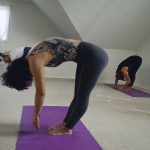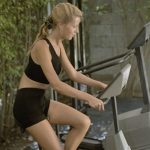









The number of weekly recommended workout sessions can really add up. With five or more periods of cardio, and two or three each of strength training, flexibility and motor skills for balance and agility, it’s inevitable that you’ll need to do more than one type of exercise on any given day. To make the most of every session, know the right sequence to follow. A Western Colorado University study sponsored by the American Council on Exercise (ACE) tested the variables and found definitive results. First, on days when you’re doing cardio, you should typically start with this workout, whatever aerobic activity you choose. You’ll not only get the maximum benefits by doing it first, but you’ll also warm up your body for the second exercise. If strength training is also part of that day’s plan, do it next. If you’re piggy-backing all types of exercise, flexibility and motor skills should follow strength training, in whatever order you like. The research found that this sequence had psychological as well as physical benefits. However, experts add that it’s fine to personalize these findings based on individual goals. For instance, if you need to focus on one type of exercise in particular, like flexibility to help with low back pain, start a multi-discipline session with that workout so that you’re fresh when doing it. Or if building muscle…  read on >

If you’re thinking about making some health-related resolutions for 2019, the American Medical Association (AMA) has some suggestions. “This is the perfect time of year for each of us to consider our personal goals, and how we can make positive health choices in the coming year,” said AMA President Dr. Barbara McAneny. “We encourage everyone to prioritize their long-term health by making small lifestyle changes now that can have a lasting effect in improving their health,” she added in an AMA news release. The association offers some tips that can make a big difference in your health: Learn your risk for type 2 diabetes: Take a self-screening test at DoIHavePrediabetes.org. If you’re at risk, the website lists steps that can help you prevent or delay development of the blood sugar disease. Get regular exercise: Adults should get at least 150 minutes a week of moderate-intensity activity, or 75 minutes a week of vigorous-intensity activity. Know your blood pressure: Get high blood pressure under control to help prevent heart attack or stroke. Eat a healthy diet: Cut down on processed foods, especially those with added salt and sugar, as well as sugar-sweetened beverages. Drink more water. Help prevent antibiotic resistance: If you’re prescribed antibiotics, take them exactly as directed. Remember: Antibiotics aren’t effective against viruses, including those that cause colds and flu. Limit alcohol and tobacco:…  read on >

Stress and uncertainty plague many Americans, but there are a number of steps you can take to cope, a psychiatrist suggests. “In this day and age of ‘digital’ perfection, the stress of daily living can take a toll on our health, causing anxiety and depression, leading to relationship difficulties, problems at work, and the feeling that you have little control over your life,” said Dr. Smita Agarkar. She is chief at the Crisis Stabilization Unit at Gracie Square Hospital in New York City. “The good news is that there are many effective ways to manage and reduce stress,” she added. Be mindful or aware of your feelings. Try to be compassionate towards yourself, accept the current situation, and let it go. There are many exercises for mindfulness. Keep a stress diary. It can help you identify when and why stress strikes, so that you can focus your efforts on managing stress, according to Agarkar. Regular exercise helps improve your ability to fight stress. After stressful events, eat healthful, well-balanced meals and get enough rest and sleep. Don’t turn to drugs, alcohol or compulsive behaviors, such as eating, to combat stress. Set limits and learn to say no to things that cause you stress. Make time for hobbies, interests and relaxation, and spend time with people you enjoy. Consider joining a support group. If stress and…  read on >

How highly you rate your health could predict how likely you are to catch a cold — and, even more important, how healthy you’ll be in later years. Scientists at Carnegie Mellon University in Pittsburgh asked 360 healthy adults to rate their health as excellent, very good, good, fair or poor — and then exposed them to a virus that causes the common cold. Overall, about one-third developed colds. While none said “poor” and only a few said “fair,” those who rated their health as “fair,” “good” or even “very good” were more than twice as likely to develop a cold as those who described it as “excellent.” What makes people give themselves a high health rating independent of indicators like their medical records or a doctor evaluation? Such factors include following positive lifestyle habits like regular exercise, having a strong social network and feeling a high level of emotional well-being. People who fit the bill are less likely to get sick and more likely to live longer, the researchers found. Conversely, people who think of their health as poor tend to have a poor health trajectory as they age. On the subject of warding off the common cold, a separate study done at Carnegie Mellon along with researchers at the University of California, San Francisco found that just one extra hour of sleep can…  read on >

Taking care of your health is one of the best gifts you can give yourself this holiday season, a medical expert suggests. “This festive time of year can be a lot of fun, but may also hurt our mental and physical health,” said Dr. Joseph Cooke, chairman of the department of medicine at NewYork-Presbyterian Queens hospital. “When we’re stressed or in a rush, it’s easy to forget to take care of ourselves. To have a happy and healthy holiday season, we should all take a few moments to pause, and be mindful of what our body and mind are telling us,” he added in a hospital news release. It’s important to set realistic expectations and goals. Say no to social activities, chores and events when you need to, and be sure your priority is on you, your family and your health. Holiday parties and shopping can expose you to illness-causing germs. Carry an alcohol-based hand sanitizer with you or wash your hands frequently with warm water and soap. Be sure to drink plenty of water. Dehydration can increase levels of the stress hormone cortisol, leading to feelings of anxiety, exhaustion and irritability, according to Cooke. Be active. Try to get at least 30 minutes of outdoor activity every day. For example, go for a run, take a walk with your family, or go ice skating.…  read on >

The exhaustion of a new baby can have negative fitness consequences as you lose the motivation to exercise and feel there’s no time to get to the gym. But not exercising actually worsens fatigue, makes it harder to lose your baby weight, and increases the risk of chronic health problems down the road. Don’t fret, though: There’s a popular way to turn the situation around — stroller walking. A small study published in the Journal of Women’s Health Physical Therapy tested the cardio benefits of walking at about 3 miles per hour while pushing a stroller, and found that it met guidelines for boosting cardio fitness. Another study quantified the metabolic advantages: The calorie burn is up to 18 percent higher at 3 miles per hour and up to 20 percent higher at 3.5 miles per hour than walking without a stroller. Of course, there are safety precautions to take for baby. A traditional 4-wheel stroller isn’t safe for jogging or even brisk walking because it lacks features that protect baby from shocks as you move quickly, especially over uneven surfaces and bumps in the road. Invest in a well-designed 3-wheel jogging stroller. And look for a lockable swivel for smooth surfaces and a fixed setting for rough surfaces. Jogging stroller features: Baby harness and safety tether. Large air-filled tires (check tire pressure often). Suspension…  read on >

(HealthDay News) — Pelvic floor muscle exercises, also called Kegel exercises, are a great way to improve and maintain bladder control, the National Association for Continence says. The exercises help strengthen the pelvic floor and may improve bladder leakage. The association offers these Kegel suggestions: Identify the muscles by trying to stop urination flow mid-stream. Build up to your routine. Performing with an empty bladder, your first goal should be to tighten your pelvic floor muscles for 5 seconds. Then relax them for 5 seconds. Try to do 5 reps on your first day. As you get used to the exercises, aim for for 10 seconds at a time, relaxing for 10 seconds between contractions. Do not hold your breath. Repeat 3 times a day.

Flexibility is a component of all types of movement — from everyday activities to the most rigorous exercises. Being flexible helps you stay mobile and avoid injury. Yet flexibility training often gets lost in the shuffle or pushed to the bottom of the list after cardio and strength training. Its goal is to increase your range of motion — how far you can reach when, for instance, you bend from side to side, or raise your arm overhead to grab an item from a high shelf. Flexibility is best achieved through static stretching, which are stretches you ease into and hold for 10 to 30 seconds while inhaling and exhaling — no bouncing, no holding your breath. As you start a stretch, focus mentally on the muscles you’re targeting. Extend just to the point of discomfort; you shouldn’t feel any pain. Here are three moves that target the lower body. For your hamstrings, sit on the floor with your legs straight in front of you. Think of your hips as a hinge and, with a straight back, lower your chest toward your thighs until you feel the stretch in the backs of your thighs. Repeat 3 to 5 times. For your hips, stand up straight, facing a sturdy chair or table in case you need it for support. Raise the heel of your right foot…  read on >

Ballet dancers are known for their sleek, sculpted look, in part the result of hours spent exercising at the ballet barre. While not everyone can dance the Nutcracker or Swan Lake, classes in “barre” are now widely available and wildly popular. Some follow classical training, which is often slow and methodical, while others are inspired by it. The technique involves very focused repetitive movements done holding onto the barre, which can be freestanding or anchored to a wall for support. Barre work enhances posture, muscle tone, balance, flexibility and coordination. The exercises tend to work four muscle groups: arms, abs, glutes and thighs, but in a true barre class the focus will be on just one of these at a time. There are lots of options for finding barre workouts. Many professional dance studios now offer classes to the general public. Local dance studios originally designed primarily for children have started to add adult classes in the evenings and on weekends for moms, and even dads. Specialty studios, like the popular Pure Barre and the Bar Method, are opening in locations across the country. It’s important to evaluate the classical dance training of instructors as well as the quality of a studio’s equipment. There should be at least two different sizes of barres available to accommodate varying heights. And ask for a rundown of the…  read on >

If you’re not yet familiar with the fitness approach called cross-training, it might sound like hard work. But it’s really just a way to add variety to your exercise routine by alternating activities. You’ll avoid boredom and boost your fitness level as well as protect against overuse injuries, which are more common when you do a single workout or sport. Reasons to cross-train: The combination of exercises adds up to a true total body workout. Your muscles learn to adapt to new types of fitness activities more quickly. Using different muscle groups helps you avoid injury. If you do suffer an injury, you may be able to still perform one of your favorite activities. With cross-training you can make sure all muscle groups are used over the course of each week. For instance, if you bike every day, swap a day or two with walking or using the elliptical to get in weight-bearing exercise. Or add swimming to give yourself a full body workout. You can apply the same concept to your strength training routine. Alternate using free weights with weight machines or taking Pilates classes, which develop the core muscles. Mix up your flexibility workouts, too, by alternating between yoga and tai chi, for instance. You can even cross-train during individual workouts — switch from one activity to another after 15 minutes if doing…  read on >