









Former U.S. Surgeon General Dr. Vivek Murthy is urging lawmakers to take stronger steps to protect children from the potential dangers of social media. In a recent interview on NBC News’ “Meet the Press,” Murthy said Congress has failed to act on what he described as a growing crisis. “Congress has not stepped up to its responsibility to protect our kids,” he said. “They need to act now.” Murthy served under both the Obama and Biden administrations. He’s asking Congress to pass laws that would require warning labels on social media apps about their impact on kids. He also said he wants more transparency from tech companies so researchers can better study how the internet affects children. He compared the situation to the early days of driving before cars had safety features. “Those have reduced the number of deaths,” Murthy told “Meet the Press” moderator Kristen Welker. “We’ve got to do the same for social media, because what we’re doing now, Kristen, is we’re basically — it’s the equivalent of putting our kids in cars with no seat belts, with no airbags, and having them drive on roads with no speed limits and no traffic lights. And that is just morally unacceptable.” Two bills aimed at regulating social media use by kids have been introduced in Congress: the Kids Online Safety Act (KOSA) and the…  read on >  read on >

Birds on a remote Australian island are so full of plastic they crunch, British researchers report. They found plastic in the bellies of chicks less than 3 months old and a dead bird with 778 individual pieces of plastic packed into its tummy “like a brick,” according to ecologist Alex Bond, principal curator at Britain’s National History Museum. “This isn’t microplastics,” he told The Washington Post. “We’re talking items up to and including the size of bottle caps and tetra pack lids, cutlery, clothes pegs, the takeaway soy sauce fish bottle that you get from restaurants.” A major 2023 study reported that mankind had filled the world’s oceans with more than 170 trillion pieces of plastic, creating a “plastic smog” that doubles roughly every six years. Bond recently returned from a visit to Lord Howe Island, about 360 miles off Australia’s east coast. He’s part of a team studying the effects of plastic pollution in the world’s oceans. For almost 20 years, it has been studying a native bird species known as sable shearwaters.  The team suspects the birds fish pieces of plastic from the ocean and feed them to their chicks, according to The Post.  About 44,000 sable shearwaters breed on the island, which is renowned for its volcanic landscape and its many kinds of birds. At about 3 months of age, shearwater chicks…  read on >  read on >

Birds on a remote Australian island are so full of plastic they crunch, British researchers report. They found plastic in the bellies of chicks less than 3 months old and a dead bird with 778 individual pieces of plastic packed into its tummy “like a brick,” according to ecologist Alex Bond, principal curator at Britain’s National History Museum. “This isn’t microplastics,” he told The Washington Post. “We’re talking items up to and including the size of bottle caps and tetra pack lids, cutlery, clothes pegs, the takeaway soy sauce fish bottle that you get from restaurants.” A major 2023 study reported that mankind had filled the world’s oceans with more than 170 trillion pieces of plastic, creating a “plastic smog” that doubles roughly every six years. Bond recently returned from a visit to Lord Howe Island, about 360 miles off Australia’s east coast. He’s part of a team studying the effects of plastic pollution in the world’s oceans. For almost 20 years, it has been studying a native bird species known as sable shearwaters.  The team suspects the birds fish pieces of plastic from the ocean and feed them to their chicks, according to The Post.  About 44,000 sable shearwaters breed on the island, which is renowned for its volcanic landscape and its many kinds of birds. At about 3 months of age, shearwater chicks…  read on >  read on >

Dirty, crowded urban environments can significantly increase a person’s risk of developing asthma, a new study says. Cleaner, better-thought-out cities could ward off 1 of every 10 asthma cases, researchers reported recently in The Lancet Regional Health – Europe. Asthma risk in both kids and adults is increased due to urban air pollution, dense development and limited green spaces, results show. Cities built or altered to address these risks can help prevent asthma, researchers said. “We have combined several environmental factors and described how they together affect the risk of developing asthma,” lead researcher Zhebin Yu, an assistant professor of environmental medicine at the Karolinska Institute in Sweden, said in a news release. “This provides a better picture of environmental risks, as life in a city usually involves exposure to several environmental risk factors at the same time,” Yu continued. For the study, researchers pooled data from 14 previous studies involving nearly 350,000 people living in seven European countries. The data contained home addresses of each person, allowing the team to tie different environmental risks to specific cases of asthma. These risks included air pollution, outdoor temperatures and the level of urban density. Nearly 7,500 people included in the study developed asthma as children or adults, and nearly 12% of asthma cases could be explained by environmental factors, results show. That means that in a…  read on >  read on >

Dirty, crowded urban environments can significantly increase a person’s risk of developing asthma, a new study says. Cleaner, better-thought-out cities could ward off 1 of every 10 asthma cases, researchers reported recently in The Lancet Regional Health – Europe. Asthma risk in both kids and adults is increased due to urban air pollution, dense development and limited green spaces, results show. Cities built or altered to address these risks can help prevent asthma, researchers said. “We have combined several environmental factors and described how they together affect the risk of developing asthma,” lead researcher Zhebin Yu, an assistant professor of environmental medicine at the Karolinska Institute in Sweden, said in a news release. “This provides a better picture of environmental risks, as life in a city usually involves exposure to several environmental risk factors at the same time,” Yu continued. For the study, researchers pooled data from 14 previous studies involving nearly 350,000 people living in seven European countries. The data contained home addresses of each person, allowing the team to tie different environmental risks to specific cases of asthma. These risks included air pollution, outdoor temperatures and the level of urban density. Nearly 7,500 people included in the study developed asthma as children or adults, and nearly 12% of asthma cases could be explained by environmental factors, results show. That means that in a…  read on >  read on >

Social media does indeed appear to be making kids more prone to depression, a new study says. Preteens are more likely to develop symptoms of depression as their use of social media increases, researchers reported May 21 in JAMA Network Open. Depression symptoms increased 35% as kids’ average social media use rose from seven minutes to 73 minutes daily over a three-year period, researchers found. However, the reverse wasn’t true: Depressed kids didn’t necessarily flock to social media, results show. “There has been ongoing debate about whether social media contributes to depression or simply reflects underlying depressive symptoms,” said lead researcher Dr. Jason Nagata, an associate professor of pediatrics at the University of California – San Francisco.  “These findings provide evidence that social media may be contributing to the development of depressive symptoms,” Nagata said in a news release. For the study, researchers analyzed data on nearly 12,000 kids participating in the Adolescent Brain Cognitive Development Study, a federally funded research project that is the largest long-term study of brain development and child health in the United States. Researchers checked the kids’ depressive symptoms and social media use at ages 9 and 10, and then three years later at 12 to 13. The kids’ social media use increased steadily as they aged, from an average 7 minutes daily at the start to 73 minutes a…  read on >  read on >

Social media does indeed appear to be making kids more prone to depression, a new study says. Preteens are more likely to develop symptoms of depression as their use of social media increases, researchers reported May 21 in JAMA Network Open. Depression symptoms increased 35% as kids’ average social media use rose from seven minutes to 73 minutes daily over a three-year period, researchers found. However, the reverse wasn’t true: Depressed kids didn’t necessarily flock to social media, results show. “There has been ongoing debate about whether social media contributes to depression or simply reflects underlying depressive symptoms,” said lead researcher Dr. Jason Nagata, an associate professor of pediatrics at the University of California – San Francisco.  “These findings provide evidence that social media may be contributing to the development of depressive symptoms,” Nagata said in a news release. For the study, researchers analyzed data on nearly 12,000 kids participating in the Adolescent Brain Cognitive Development Study, a federally funded research project that is the largest long-term study of brain development and child health in the United States. Researchers checked the kids’ depressive symptoms and social media use at ages 9 and 10, and then three years later at 12 to 13. The kids’ social media use increased steadily as they aged, from an average 7 minutes daily at the start to 73 minutes a…  read on >  read on >

Battling chronic disease really takes it out of a person, leaving them vulnerable to depression. And people with multiple long-term health problems are even more likely to fall prey to depression, a new study says. Some combinations of illnesses can more than double the likelihood a person will eventually be diagnosed with depression, researchers reported this month in the journal Nature Communications Medicine. “Healthcare often treats physical and mental health as completely different things, but this study shows that we need to get better at anticipating and managing depression in people with physical illness,” co-researcher Bruce Guthrie, a professor of general practice at the University of Edinburgh in the U.K., said in a news release. For the study, researchers tracked more than 142,000 participants in the ongoing U.K. Biobank study who had at least one chronic health problem but no history of depression. The people ranged in age from 37 to 73. Researchers found that those with the highest rates of physical illnesses had a 2.4 times higher risk of depression, the highest found in the study. These patients had on average more than four chronic health problems. Depression risk was doubled in people suffering from migraine disorders or chronic lung problems, while heart disease combined with diabetes increased risk by 78%, results show. Digestive conditions like irritable bowel syndrome (IBS), celiac disease and liver…  read on >  read on >

Battling chronic disease really takes it out of a person, leaving them vulnerable to depression. And people with multiple long-term health problems are even more likely to fall prey to depression, a new study says. Some combinations of illnesses can more than double the likelihood a person will eventually be diagnosed with depression, researchers reported this month in the journal Nature Communications Medicine. “Healthcare often treats physical and mental health as completely different things, but this study shows that we need to get better at anticipating and managing depression in people with physical illness,” co-researcher Bruce Guthrie, a professor of general practice at the University of Edinburgh in the U.K., said in a news release. For the study, researchers tracked more than 142,000 participants in the ongoing U.K. Biobank study who had at least one chronic health problem but no history of depression. The people ranged in age from 37 to 73. Researchers found that those with the highest rates of physical illnesses had a 2.4 times higher risk of depression, the highest found in the study. These patients had on average more than four chronic health problems. Depression risk was doubled in people suffering from migraine disorders or chronic lung problems, while heart disease combined with diabetes increased risk by 78%, results show. Digestive conditions like irritable bowel syndrome (IBS), celiac disease and liver…  read on >  read on >

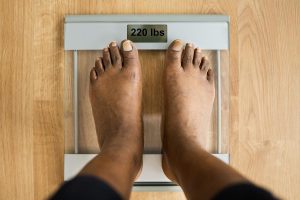
Cutting-edge GLP-1 weight-loss drugs appear to help lower cancer risk even beyond the benefits from dropping excess pounds, a new study says. First-generation GLP-1 drugs like liraglutide (Saxenda) and exenatide (Byetta) were associated with a 41% lower risk of obesity-related cancers, compared with weight-loss surgery, researchers report in the journal eClinicalMedicine. “We do not yet fully understand how GLP-1s work, but this study adds to the growing evidence showing that weight loss alone cannot completely account for the metabolic, anti-cancer, and many other benefits that these medications provide,” lead researcher Dr. Yael Wolff Sagy from Clalit Health Services in Tel-Aviv, Israel, said in a news release. Newer generation, highly potent GLP-1 drugs like Ozempic and Zepbound might even convey a greater advantage in reducing cancer risk, but they weren’t studied in this report, researchers said. Glucagon-like peptide-1 (GLP-1) drugs mimic the GLP-1 hormone, which helps control insulin and blood sugar levels, decreases appetite and slows digestion of food. For the new study, researchers tracked electronic health record data for more than 6,300 people 24 and older. All had obesity and type 2 diabetes and were treated with first-generation GLP-1 drugs or underwent weight-loss surgery between 2010 and 2018. Obesity and diabetes are both associated with an increased risk for many types of cancer, including breast, colon, uterus, liver, pancreatic, thyroid, stomach and ovarian cancers, researchers…  read on >  read on >