









Stress from work doesn’t always stay at the office — and it may be affecting more than just your mood.  A new study finds that your dog may be picking up on it, too, especially if you have a hard time letting go of work worries at the end of the day, Psychology Today reported. The study — by researchers at Washington State University and published in the journal Scientific Reports — looked at 85 working adults who live with dogs.  It found that dogs showed more signs of stress when their owners felt highly stressed at work and couldn’t let it all go at day’s end. Participants completed surveys about their work stress, how often they thought about work during their free time (rumination), as well as their dog’s behavior. Dogs whose owners often dwelled on work were more likely to act stressed themselves — pacing, whining or being less playful. Interestingly, many dog owners didn’t realize their pets were showing signs of stress. Further, it wasn’t just high job stress that affected the dogs — it was rumination that made the biggest difference. When people mentally carry work problems into their personal time, they tend to be more tense and distracted. Their body language, tone of voice and behavior can signal stress — and dogs are very good at picking up on these…  read on >  read on >

The mentally scarred, deeply depressed combat veteran is an indelible stereotype promoted by movies and TV. The post-traumatic stress and despair that some suffer following military deployment have prompted concerns that service members are highly vulnerable to depression. However, the opposite might be true, a new study says. General service in the military actually appears to lower a person’s risk for depression rather than increase it, according to findings published May 29 in the journal BMJ Military Health. Military service is associated with a 23% lower risk for depression, after accounting for other potentially influential factors, researchers report. “These findings suggest that military service may have protective effects against depression, contrary to some previous assumptions,” concluded a research team led by X.L. Shi of the Hospital of Shandong Provincial Corps in China. It’s not unreasonable to think military service could foster depression, given the soldiers’ separation from their loved ones and the toll of combat, researchers said. But the service also can shape personal growth and enhance coping skills, which might protect against depression, researchers noted. For this study, researchers drew on data from five cycles of the U.S. National Health and Nutrition Examination Survey conducted between 2011 and 2023. Conducted by the National Center for Health Statistics, the survey includes health exams and lab tests to check the health of participants. The team evaluated…  read on >  read on >

The mentally scarred, deeply depressed combat veteran is an indelible stereotype promoted by movies and TV. The post-traumatic stress and despair that some suffer following military deployment have prompted concerns that service members are highly vulnerable to depression. However, the opposite might be true, a new study says. General service in the military actually appears to lower a person’s risk for depression rather than increase it, according to findings published May 29 in the journal BMJ Military Health. Military service is associated with a 23% lower risk for depression, after accounting for other potentially influential factors, researchers report. “These findings suggest that military service may have protective effects against depression, contrary to some previous assumptions,” concluded a research team led by X.L. Shi of the Hospital of Shandong Provincial Corps in China. It’s not unreasonable to think military service could foster depression, given the soldiers’ separation from their loved ones and the toll of combat, researchers said. But the service also can shape personal growth and enhance coping skills, which might protect against depression, researchers noted. For this study, researchers drew on data from five cycles of the U.S. National Health and Nutrition Examination Survey conducted between 2011 and 2023. Conducted by the National Center for Health Statistics, the survey includes health exams and lab tests to check the health of participants. The team evaluated…  read on >  read on >

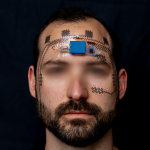
Ever thought so long and hard on a problem that your forehead grew hot, your brain became frazzled and your eyes grew bleary? A new temporary tattoo can help measure that sort of mental strain, researchers report. The wireless forehead electronic tattoo decodes brainwaves to measure mental strain and potential burnout without bulky headgear, researchers reported today in the journal Device. This e-tattoo could help improve safety among folks in jobs that require constant focus, like air traffic controllers or truckers, researchers said. “We’ve long monitored workers’ physical health, tracking injuries and muscle strain,” researcher Luis Sentis, a professor of engineering at the University of Texas at Austin, said in a news release. “Now we have the ability to monitor mental strain, which hasn’t been tracked,” he continued. “This could fundamentally change how organizations ensure the overall well-being of their workforce.” There’s a cognitive “Goldilocks zone” for humans, where they perform best when they’re neither overwhelmed nor bored, researchers said in background notes. “There is an optimal mental workload for optimal performance, which differs from person to person,” senior researcher Nanshu Lu, a professor of engineering at the University of Texas at Austin, said in a news release. The wireless e-tattoo consists of a lightweight battery back and paper-thin sticker-like sensors, researcher said. The sensors feature wavy loops and coils, which allows them to stretch…  read on >  read on >

Belly flab appears to be a stronger warning sign for psoriasis than fat located elsewhere on the body, a new study says. Fat around the abdomen is more strongly linked to psoriasis risk that total body fat, particularly in women. “Our research shows that where fat is stored in the body matters when it comes to psoriasis risk,” lead researcher Dr. Ravi Ramessur, a dermatologist at the St. John’s Institute of Dermatology at King’s College London, said in a news release. Psoriasis is a chronic skin condition in which the body overproduces new skin cells, churning them out in days rather than weeks, according to the American Academy of Dermatology. The overabundant cells pile up, creating thick, scaly patches that itch like the dickens. Many people with psoriasis have excess weight, and it’s well-established that increasing levels of body fat raise a person’s risk of psoriasis, researchers said in background notes. However, it hasn’t been clear if the fat distribution on a person’s body matters when it comes to psoriasis risk, researchers said. For the study, researchers analyzed data from more than 330,000 participants in the U.K. Biobank, a large-scale health research project, including more than 9,000 people with psoriasis. The team examined 25 measures of body fat using traditional methods and advanced imaging techniques to see how each was associated with psoriasis. It turned…  read on >  read on >

Belly flab appears to be a stronger warning sign for psoriasis than fat located elsewhere on the body, a new study says. Fat around the abdomen is more strongly linked to psoriasis risk that total body fat, particularly in women. “Our research shows that where fat is stored in the body matters when it comes to psoriasis risk,” lead researcher Dr. Ravi Ramessur, a dermatologist at the St. John’s Institute of Dermatology at King’s College London, said in a news release. Psoriasis is a chronic skin condition in which the body overproduces new skin cells, churning them out in days rather than weeks, according to the American Academy of Dermatology. The overabundant cells pile up, creating thick, scaly patches that itch like the dickens. Many people with psoriasis have excess weight, and it’s well-established that increasing levels of body fat raise a person’s risk of psoriasis, researchers said in background notes. However, it hasn’t been clear if the fat distribution on a person’s body matters when it comes to psoriasis risk, researchers said. For the study, researchers analyzed data from more than 330,000 participants in the U.K. Biobank, a large-scale health research project, including more than 9,000 people with psoriasis. The team examined 25 measures of body fat using traditional methods and advanced imaging techniques to see how each was associated with psoriasis. It turned…  read on >  read on >

Popular GLP-1 weight loss drugs like Ozempic and Zepbound can help reduce a woman’s risk for as many as 14 cancers associated with obesity, a new study says. People taking a GLP-1 drug had a 7% lower risk of developing an obesity-related cancer and an 8% lower risk of death from any cause, compared to others taking a type of diabetes drug called DPP-4 inhibitors, researchers found. Women in particular benefit from the weight-loss drugs, researchers are scheduled to report at an upcoming meeting of the American Society of Clinical Oncology (ASCO). Women taking the drugs had an 8% lower risk of obesity-related cancer, as well as a 20% overall lower risk of death, results show. Men received no statistically significant cancer benefit from GLP-1 meds. “Although obesity is now recognized as an increasingly important cause of cancer in the United States and worldwide, no medications have been proven to lower the cancer risk associated with obesity,” said lead researcher Lucas Mavromatis, a medical student at the NYU Grossman School of Medicine in New York City. “Our study begins to fill that gap by evaluating GLP-1 receptor agonists, a relatively new but widely prescribed medication that treats diabetes, obesity, and related conditions,” Mavromatis added in a news release. Glucagon-like peptide-1 (GLP-1) drugs mimic the GLP-1 hormone, which helps control insulin and blood sugar levels, decreases…  read on >  read on >

Popular GLP-1 weight loss drugs like Ozempic and Zepbound can help reduce a woman’s risk for as many as 14 cancers associated with obesity, a new study says. People taking a GLP-1 drug had a 7% lower risk of developing an obesity-related cancer and an 8% lower risk of death from any cause, compared to others taking a type of diabetes drug called DPP-4 inhibitors, researchers found. Women in particular benefit from the weight-loss drugs, researchers are scheduled to report at an upcoming meeting of the American Society of Clinical Oncology (ASCO). Women taking the drugs had an 8% lower risk of obesity-related cancer, as well as a 20% overall lower risk of death, results show. Men received no statistically significant cancer benefit from GLP-1 meds. “Although obesity is now recognized as an increasingly important cause of cancer in the United States and worldwide, no medications have been proven to lower the cancer risk associated with obesity,” said lead researcher Lucas Mavromatis, a medical student at the NYU Grossman School of Medicine in New York City. “Our study begins to fill that gap by evaluating GLP-1 receptor agonists, a relatively new but widely prescribed medication that treats diabetes, obesity, and related conditions,” Mavromatis added in a news release. Glucagon-like peptide-1 (GLP-1) drugs mimic the GLP-1 hormone, which helps control insulin and blood sugar levels, decreases…  read on >  read on >

U.S. mothers are struggling with both their mental and physical health, a new study says. The percentage of mothers who report excellent mental health dropped 12 points between 2016 and 2023, from 38% to 26%, researchers reported today in JAMA Internal Medicine. Mothers reporting excellent physical health dropped by four points, from 28% to 24%, researchers found. At the same time, there was a three-point increase in the percentage of mothers who rate their mental health as fair or poor, going from 5.5% in 2016 to 8.5% in 2023. “Our results highlight the rising tide of worsening mental health among parenting women as a key target for efforts to improve maternal and child health in the U.S.,” lead researcher Jamie Daw, an assistant professor of health policy and management at the Columbia University Mailman School of Public Health, said in a news release. For the study, researchers reviewed results from an annual survey conducted by the U.S. Census Bureau assessing the health and well-being of American parents and kids. Responses from more than 198,000 mothers showed that mental health declines have occurred broadly among most groups in the U.S., researchers said. However, physical and mental health was significantly lower among single mothers, those with less education and those whose children are uninsured or covered by public insurance programs like Children’s Health Insurance Program (CHIP) or…  read on >  read on >