







It’s not uncommon for a woman’s sex life to slow down with age, but hormones aren’t the only reason she might not be in the mood, a new study suggests. Postmenopausal issues, such as vaginal dryness or pain during sex, definitely put a damper on a woman’s desire. But just as often, it was issues with her partner that brought sexual activity to a halt. “Low libido is common in older women — about 40% of older women have low libido,” said study author Dr. Holly Thomas. “Yet, women in our study reported that they considered sex to be an important part of their lives,” she added. “I think the biggest message from our study though, is that low libido has a lot of causes,” and treatment will vary in each case. Thomas is an assistant professor of medicine at the University of Pittsburgh. She and her colleagues interviewed 15 women. They also conducted three focus groups with a total of 21 women who were in their 60s and sexually active. Most of the women were white and heterosexual. Eighty-three percent were married or living with their partner. The most common reasons for a lack of desire included: Postmenopausal conditions: After menopause, the lack of estrogen can cause symptoms that make sex less pleasurable, and even painful. Vaginal dryness, a feeling of tightness and a…  read on >

Many Americans aren’t getting a solid seven hours of sleep a night, putting them at risk for diabetes, heart disease and obesity. But it’s the brain that needs a good night’s sleep the most, according to Dr. Randall Wright, a neurologist at Houston Methodist Hospital. “When you are asleep, your brain catches up on tasks it can’t do while you are navigating your day, such as cleaning out waste, saving new information, and filing away memories,” Wright said in a hospital news release. “When you don’t get enough sleep, the brain can’t complete all of these tasks, and that can lead to memory problems and serious brain disease in the long run.” It might also cause the chronic conditions associated with lack of sleep, he said. Wright offered three tips to help you get to sleep and stay asleep. Start a nightly wind-down routine, which might include brushing your teeth, taking a warm shower, listening to relaxing music and reading a book. “Your brain will begin to recognize this pattern as signals that it is time to relax and will release hormones to help you fall asleep when you get in bed,” Wright said. Keep your electronics out of the bedroom. “This may not be practical for adults, but is a must for kids,” he said. Don’t use your phone once you’ve started winding down,…  read on >

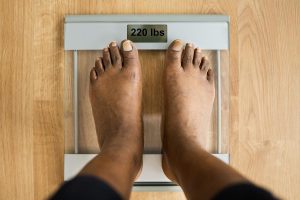
(HealthDay News) — Measuring weight is key to calculating your body mass index (BMI), says the Centers for Disease Control and Prevention. To measure weight accurately at home, the CDC recommends: Use a digital scale. Avoid scales that are spring-loaded. Place the scale on a firm floor, rather than on carpet. Remove shoes and heavy clothing. Stand with both feet in the center of the scale. Record the weight to the nearest decimal fraction.

Speaking outside the White House on Friday, President Donald Trump said his administration plans to raise the U.S. federal legal age to buy e-cigarettes from 18 to 21. That’s just one plank in the administration’s new plan to curb youth vaping, Trump told reporters. “We have to take care of our kids, most importantly, so we’re going to have an age limit of 21 or so,” the Associated Press reported. The White House’s proposed move is not the first in the United States: About a third of states have already raised their sales age to 21. But federal law still puts the age at 18. Back in September, President Trump announced that the White House would propose a ban on all flavored e-cigarette products as well. Flavored vapes are thought to be especially attractive to kids and teens. However, the absence of such an announcement on Friday has some experts worried that Trump might not come through with that move, the AP said. Trump’s statement to reporters was somewhat vague. “We’re talking about the age, we’re talking about flavors, we’re also talking about keeping people working — there are some pretty good aspects,” he said. And in a separate White House event on Friday, Trump adviser Joe Grogan seemed to offer a softer stance on vaping. He called e-cigarettes are “a viable alternative to combustible…  read on >

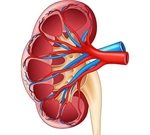
Taking vitamin D and fish oil supplements won’t prevent kidney disease in people with type 2 diabetes, a new study finds. Many diabetics use the supplements, hoping they will have a positive effect on their kidneys and heart, the researchers said. “We wanted this study to clarify whether these supplements have any real kidney benefit in adults with diabetes. Even if it’s not the result we hoped for, closing a chapter is useful for patients and clinicians and researchers alike,” said lead author Dr. Ian de Boer. He is a professor of medicine at the University of Washington School of Medicine, in Seattle. The researchers hoped the supplements would be beneficial because animal studies and lab experiments had suggested that anti-inflammatory and other properties in these supplements might prevent or slow progression of kidney disease in people with type 2 diabetes. And in humans, other research has found a link between kidney problems and low levels of vitamin D and diets lacking fish. For the study, which was part of the nationwide Vitamin D and Omega-3 Trial (VITAL), the researchers looked at kidney function in more than 1,300 people with type 2 diabetes. Study participants were randomly assigned to get vitamin D and fish oil supplements; vitamin D and a fish oil placebo; fish oil and a vitamin D placebo; or two placebos. Over five…  read on >

Being on a weight-loss diet day in and day out for months on end can be challenging and even discouraging. What’s more, following the same never-ending diet could be the reason you aren’t getting the results you’re looking for. A study in the International Journal of Obesity found an alternative that can provide better weight loss results and is easier to stick with. The “MATADOR” study recruited 51 participants, all obese men. MATADOR is short for Minimizing Adaptive Thermogenesis And Deactivating Obesity Rebound. After four weeks in which their caloric needs were calculated, participants followed either a continuous diet or a “restricted intermittent diet” of two weeks on followed by two weeks off for 16 weeks. Men who followed the restricted intermittent diet achieved greater weight loss at the conclusion of the study. This suggests that a two-week-on, two-week-off diet plan could help you shed unwanted weight and keep it off. One theory is that the breaks keep your metabolism from resetting at a lower caloric need, a reset that makes it harder to keep losing weight without more calorie cuts. There’s one caveat to trying this strategy on your own: It’s important to refrain from overindulging during your off weeks. Make sure your eating during off-weeks is balanced, with a variety of foods totaling about 500 calories a day more than you eat during…  read on >

Opioid painkillers may temporarily ease the discomfort of arthritis, but they have no clear lasting benefit, a research review finds. In an analysis of 23 clinical trials, researchers found that, on average, opioid medications were somewhat effective at easing pain in patients with osteoarthritis. That’s the common form of arthritis in which cartilage cushioning the joints gradually wears down, leading to swelling, stiffness and pain. But the trials found no evidence that opioids improved patients’ quality of life or helped with their depression. And any benefits for pain seemed to wane with time. “We found that the magnitude of these effects is small and continues to decrease over time,” said lead researcher Dr. Raveendhara Bannuru. He is director of the Center for Treatment Comparison and Integrative Analysis at Tufts Medical Center, in Boston. Treatment guidelines for chronic pain, other than cancer-related pain, already say opioids should be a last resort. With osteoarthritis, Bannuru said, the drugs are only recommended if a patient has not gotten relief from other medical therapies, and if surgery — like knee or hip replacement — is not an option. Instead, patients should try to exercise regularly and maintain a healthy lifestyle. As for medications, Bannuru said, topical versions of nonsteroidal anti-inflammatory drugs (NSAIDs) — like ibuprofen and naproxen — are a “first choice.” These creams or ointments help people avoid…  read on >

(HealthDay News) — That persistent tickle in the back of your throat may be diagnosed as post-nasal drip, says Harvard Medical School. It mentions these common treatment options for the condition: Use a humidifier, or take a hot shower. Keep well-hydrated to help keep mucus thin. Sleep on propped-up pillows. Moisten the inside of your nose with an over-the-counter product. Use an oral decongestant or antihistamine. If these approaches aren’t effective, speak with your doctor about prescription treatments.

From Halloween through New Year’s, holiday weight gain affects people the world over and, according to a study published in the New England Journal of Medicine, it can happen with any major holiday, not just the winter ones. As you might know firsthand, it’s a lot harder to lose that weight than to put it on. So even if you start every new year with just an extra pound or two, if you repeat this pattern yearly, your weight will just keep rising. That’s why the best approach is preventive — being aware of extra calories, starting now. There is another, separate challenge to healthy eating during the cold weather months in many parts of the country — much less availability of locally grown fruits and vegetables. It’s still possible to buy foods like berries and peppers, for instance, but you’ll pay a higher price, and in some regions, the selection of fresh produce simply shrinks. That helps explain the results of a study that polled women in North Dakota. Researchers found that diet quality was lower in winter when foods like corn, berries, tomatoes and lettuces were less available. What to do? Switch to dark leafy greens, squashes and root vegetables, and supplement with frozen fruits and vegetables, which can be as nutritious as fresh because they’re typically packaged soon after harvesting. Another smart…  read on >

A new federal report points to an oily chemical known as vitamin E acetate as the likely culprit behind more than 2,000 cases of severe lung illness among vapers. After taking fluid samples from the lungs of 29 vapers who were hospitalized for the illness in 10 states, scientists from the U.S. Centers for Disease Control and Prevention spotted the chemical in all of the samples. “This is the first reported identification of a potential toxicant of concern (vitamin E acetate) in biologic specimens obtained from [these] patients,” the researchers said in the Nov. 8 online edition of the CDC’s Morbidity and Mortality Weekly Report. “These findings provide direct evidence of vitamin E acetate at the primary site of injury.” But the CDC researchers added that more study is still needed. “Based on these data from 29 patients, it appears that vitamin E acetate is associated with [severe lung illness]; however, it is possible that more than one compound or ingredient could be a cause of lung injury, and evidence is not yet sufficient to rule out contribution of other toxicants,” according to Benjamin Blount and his colleagues at the CDC. Vitamin E acetate is derived from vitamin E, which is found in vegetable oils, nuts and seeds, and leafy green veggies. It is available as a dietary supplement and skin treatment. But when vaped…  read on >